A journey through some of the key voices of the ONA Film Festival
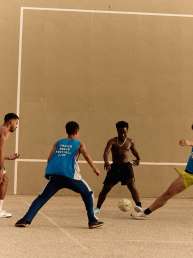
These days (September 4th–6th), the ONA Film Festival returns to fuse outdoor and sports culture with the art of cinema, once again transforming the already charming island of San Servolo, in Venice, into a unique celebration of movement, landscape, and story. As in previous editions, Athleta Magazine is proud to support ONA as a media partner, turning its editorial spotlight onto some of the festival’s most compelling protagonists.
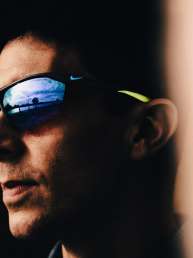
Today, we turn to the powerful testimony of Joel Colque—a Chilean ultrarunner who experiences running not simply as a sport, but as an ancient tale. More than that, as a living cultural heritage: the legacy of the Atacama Desert, a place that breathes and speaks through every step of Joel, revealing its deep ancestral essence. Nature and identity. Knowledge and transmission. Ritual and record-breaking.
Colque is a rare voice—a tour guide by profession, an athlete by inheritance—already a two-time winner of the Ckalama Extreme, one of the toughest high-altitude races on Earth. At ONA, his story is brought to the screen thanks to a collaboration with Diadora and the festival’s organizers, the Gómez brothers. While we await the full release, we offer a glimpse into the journey of this extraordinary athlete.


What does the Atacama Desert represent for you, and what did growing up there give you? Even more so, what does it mean to be an Atacameño Licanantay?
Joel Colque: “I am Atacameño, I am Licanantay. I don’t think it was a choice but rather the legacy of many generations of my culture passed down through time. I happened to be born in this part of the world that, for many people, is impossible to live in. I work in tourism, and many visitors to San Pedro say, ‘I could never live in this place.’ It’s very beautiful, but also very challenging. For those who were born on this land, it’s a wonderful place—a place that deeply connects the human being with the earth, with the water—the scarce water we have—but also with all the elements around us. We are grateful for all of it. We’re grateful to be alive in this moment, in this space. So, I’m proud to be Atacameño, proud to be Licanantay.
For me, living in the desert means understanding nature. Many people come here and see the desert as so dry and arid, with so many minerals… For them it seems impossible to live here. We Atacameños, generation after generation, have learned to adapt to this environment and to include ourselves in it. Because if you don’t feel part of the desert, you will never truly adapt. So we Atacameños feel like we belong here. When there’s a sandstorm, we give thanks for it. When the sun is strong, we give thanks for it. When the few clouds arrive throughout the year, we give thanks for them. We are grateful for everything that nature gives us.”
What role has running played — and continues to play — in your life, and in your relationship with your land and its history?
Joel Colque: “As Atacameños, my grandparents and ancestors always told us when we were six or seven years old, they would take us up to the high mountains of the Andes. There was something that always fascinated me, called ‘cutting the altitude sickness.’ My grandfather and my father used to say, ‘We’re going to cut your altitude sickness,’ meaning that you would have to run at altitude, at six or seven years old, run to the point of passing out or bleeding from your nose, mouth, or ears—and that would be the last time you feel altitude sickness.
My father did this to me when I was about six or seven years old. I remember being in the Andes, in the mountains, having a terrible headache, and he made me run until I passed out. I don’t remember much; two or three hours later, I woke up beside a river with a fire nearby. Since that moment, from age six until today (37 years old) I’ve never felt altitude sickness again. I’ve been many times in South America, for example, at Aconcagua, and never felt altitude effects. So, we were ‘cut’ in a way by altitude. And as a culture, we have always had great respect for the mountains.
A couple of years ago, I had the opportunity to run a race, the Ckalama Extreme, which is the only race in the world that challenges participants to summit two volcanoes over 6,000 meters in a limited time—about 18 hours maximum. It was very difficult to talk to my parents and tell them I wanted to run this race because, in our culture, mountains were never used like this; they were always sacred. So I struggled with this dilemma within my family. But later, my partner, my children, and much of my close family said, ‘If you feel capable and want to do it, why not?’ So I decided to register. I had run shorter races before, here in San Pedro, but never this big a challenge.
This race has been held for a long time, but including these two volcanoes has only been done for two years. In the first two editions, I won. The first time, it took me about 12 and a half hours, and last year, 9 hours and 15 minutes. I could hardly believe it. I have always worked as a tour guide. Every day, I walk, bike, climb mountains and volcanoes. But it’s like going to the office—you don’t think, ‘I have to win,’ but rather, ‘I have to do my work.’ I combined my work, culture, and sport and managed to do this, which I really enjoyed.
Now, my parents are very proud, after initially saying I couldn’t do it. Here in San Pedro, many people have talked about this on TV, on the radio, even in Chile, and beyond. I’m really happy to show a bit of my culture beyond Chile’s borders, beyond the desert, to show that the Atacameños living here have a rich history and ancestral wisdom—like how we ‘cut’ altitude sickness, for example.”


What feelings have you experienced throughout this journey, especially when it comes to sharing your culture with the outside world? Do you also see this as a way to offer a new vision of life to the next generation, to those who will come after you?
Joel Colque: “Without a doubt. I think, for example, in schools today, many young people are starting to lean toward sports. They’re looking at the mountains not just as something to take pictures of, but as something to climb—as a world to discover up there. So, I’ve been giving talks—not formal courses, but conversations—in schools and high schools, trying to plant a seed with this sport. Because, unfortunately, and I say this with all respect, here in South America, everyone dreams of becoming a football player. Messi, Cristiano Ronaldo—they’re the figures young people look up to. Every kid wants to be like them and follow the path of football, which is beautiful—I love it too—but the truth is, there’s simply not enough space for so many children to make a living from football.
But there are other sports. There are other paths that also require discipline, effort, and time, and through them, you can still find your way—you can show the world who you are. That’s why I’ve been trying to promote this in my family first. I have four children, and I try to encourage them through sport. My youngest is six and has already climbed a 3,600-meter volcano. When my daughter turned 12, she reached 5,600 meters. For many people, this sounds like madness—‘Why would you take such young kids into the mountains?’—but it’s about instilling something. And friends of my children now say, ‘I want to do that too, I want to go trekking, I want to climb a mountain.’
From the moment I was given this opportunity, I’ve tried—however I can—to encourage the younger generation. I want to inspire action. I want to help young people feel real experiences—feel the cold, the heat, the ice that burns your skin. I want them to feel what nature is. That’s what I want to pass on. And hopefully, here in San Pedro, one day we’ll have a top cyclist—we’re already working with one—or a marathon runner.”
You spoke about your special relationship with the mountains. In your experience, has tourism sometimes conflicted with this relationship—especially when seen through the eyes of international visitors? How far is the world’s perception from your own cultural connection to the mountains?
Joel Colque: “I think it’s still very far—very limited. San Pedro de Atacama, for example, is well-known, but tourists mostly come looking for the iconic places: the Valley of the Moon, El Tatio Geysers… very few go deeper, very few want to really connect with the culture here. It’s like Paris—everyone wants to see the Eiffel Tower, take a picture and say, ‘I went to France, I saw Paris.’ But beyond the tower, there’s an entire world and culture that people often miss. That’s what happens here too.
I’d say over 70% of visitors come just for the famous spots, the touristic postcard version of San Pedro. Very few people want to truly engage with the Atacameño culture—who we are, how we live. Thankfully, tourism has brought us work, and we now welcome many visitors from Brazil. For Brazilians, this place is a paradise—completely different from their green country. But most of them are ‘photo tourists’—they come for the picture, to say, ‘I was here.’ Very few are interested in understanding what lies beyond that surface, in how we actually live here.
In recent years, though, some of the local youth have been trying to promote more cultural tourism. Experiences where visitors can spend a day with a shepherd or a farmer in the Atacama Desert. That’s been attracting attention. But it’s still very new. We’re just getting started. For a long time, tourism here was all about exploiting the landscape—giving people what they wanted: the famous places. But the cultural aspect? Tourists still take away very little of that.”


You’ve competed against international athletes—do you feel like you carry a kind of internal wisdom or practice that gives you an edge, something deeply tied to growing up in this land, something perhaps others simply can’t access?
Joel Colque: “I have a lot of faith in the fact that I was ‘cut from the altitude.’ I don’t know if a doctor would come and say, ‘Yes, this is what gives you your strength, this is why you perform so well.’ Maybe it’s just a placebo—maybe it’s all in my head. I’m a tour guide, and I’ve seen it over and over: I take people to high altitudes, and the moment you mention altitude sickness, they start feeling it. There’s so much power in the mind. Sometimes, I’ll hand someone an oxygen mask without even turning on the oxygen—and they’ll feel better, instantly. So, in my case, when I’m racing, I tell myself: I was cut from the altitude. I should feel tired, sure, but I won’t suffer from the effects of the altitude. That belief, I think, is key—even if it’s just mental.
Maybe a doctor would tell me I’m no different than anyone else. But I believe so deeply in my culture, in my ancestors, in what my parents did for me, that I carry it with me wherever I go. Every mountain I climb, I approach with respect. The day before a race, I go alone to a quiet place, kneel, and ask permission. I speak to the volcanoes, the mountains, to our ‘Pat’ta Hoiri,’ our Mother Earth. I ask for their blessing and then I leave it in their hands. Beyond that, there’s nothing more.”
What was it like to collaborate and share your story with a brand so deeply rooted in sports culture, like Diadora, and the ONA team, meaning Joaquín and Tomás?
Joel Colque: “To me, it felt like something that fell from the sky—like winning the lottery. I never came from that world, never expected anything like this. And then Diadora shows up and says, ‘Hey, we want to tell your story.’ I was just stunned. I hadn’t gone into the race thinking I wanted attention or sponsors—I ran because I was curious to see what I could do. Everything that happened after was a gift. I’m deeply grateful to the land, to the universe, for having brought me this opportunity—this moment, even.”
What do you hope your story showing at ONA will transmit to the audience? And how does it feel to know a part of your journey will be shared with the entire island of San Servolo?
Joel Colque: “What I feel is that I’ve planted a seed. A seed that will grow, and maybe someday—whether I’m still here in this life or not—someone will come to know my culture, the one that lives and breathes in this desert. Maybe I was just a link, a connector—but I am only a part of the culture. I’m not the culture itself; the culture is here, it exists beyond me.
If the ONA Short Film Festival and everything around it helps make that culture known—then I’ve done something meaningful. I’ve planted a tiny seed. And maybe someone watching the film will say, ‘Hey, there’s a place in the world, in the desert, where someone climbs volcanoes… but beyond that, there’s a culture.’ And maybe they’ll want to learn more.
That’s what my grandparents always taught me—to plant without expecting anything in return. Because one day, that will come back—not to you, but to those who follow. Sharing my culture in this way is about keeping it alive. I don’t want it to disappear in two generations. I want it to live on, in the world.”


After everything you’ve accomplished these past years, do you see running continuing to be a part of your life? What’s next?
Joel Colque: “Running in the mountains is something I love deeply and will forever be a part of me. For years, when people called me a mountaineer, I’d say, ‘No, I just climb hills.’ But now, I’ve accepted it—I am a mountaineer. I love being in the mountains, where the cold burns your skin, where the sun rises—it’s where I belong. This year, the Ckalama Extreme race won’t be held. They’re moving it to next year. The race organizers want to add more difficulty, even more than it already has. They want snow, they want ice. That would make the ascent much more technical, more challenging because of the cold. But they’re aiming for that, and so am I. I’m already training, aiming to beat my own time. My dream is to go under 9 hours. That’s my goal for the third edition of the race, next year. Whether or not I achieve it, I’m working toward it with all my heart. And yes, I’ll keep running until my body will allow me to do that”
Join the ONA Film Festival, visit the website https://onafilmfestival.com/.