


30 Years of Space Jam | Greatness in London
Jordan Brand celebrates the 30th anniversary of Space Jam, bringing Toon World straight to London, where the London Lions and their home, the Copper Box Arena, have brought the stylistic and narrative legacy of a timeless film into contemporary basketball
London. The Copper Box Arena opens onto a parallel universe, a Toon World draped in green, where the interplay between cult animation and basketball in its purest form unfolds in full, reaffirming the inexhaustible power of their union.
The celebration of Space Jam’s 30th anniversary, a film that has become a cultural phenomenon and an enduring aesthetic reference, takes shape on and around this hardwood. At its heart are the London Lions, a club increasingly placing British basketball on the global map of the Game, and one that, for an evening filled with children of all ages and generations, brought to life the imaginative possibilities first conjured by the MJ-Bugs Bunny pairing back in 1996, a year that feels both distant and remarkably present.
Those same possibilities found tangible expression in the special collection created for the anniversary, in the exclusive kits worn by the Lions before and throughout the forty minutes of play, and in the words of two of the evening’s protagonists, Tarik Phillip and Deane Williams. Both helped the Lions overcome the Bristol Flyers, extending an unbeaten run stretching back to the opening of the Super League Basketball season.


What impact has Space Jam had on you, both as a basketball player and as a person? Thirty years after its release, what has stayed with you the most?
Tarik Phillip: “Space Jam is one of the first basketball films you watch as a kid. You see the characters drinking that special formula, gaining superpowers and essentially becoming superheroes on the court. As a child, you dream of experiencing something like that yourself. And those memories stay with you as you grow older, especially when basketball becomes such a big part of your everyday life. The way the film brought cartoons and basketball together was simply brilliant.”
Deane Williams: “For me, Space Jam is incredibly nostalgic. It brings back so many memories of growing up playing basketball with my family, especially my father. Being part of this experience thirty years later feels like a full-circle moment, particularly because I’m thirty myself. Jordan Brand has put on an amazing show, and the whole setup is unbelievable. I hope this event inspires other kids in the same way Space Jam inspired me to get into basketball. The film reminds you that there’s a fun side to the game, that basketball doesn’t always have to be so serious. I hope everyone here today, kids and adults alike, has enjoyed themselves. And hopefully, we’ll continue to see crowds like this at our games, because that kind of atmosphere really makes a difference for us on the court.”
Through Space Jam, Michael Jordan showed the world that an athlete could transcend the boundaries of sport, becoming a cultural icon and even a movie star. How has MJ influenced your perspective on life?
Tarik Phillip: “His influence has been tremendous. Sport has the power to change people’s circumstances, transform communities and bring people together. Everything Michael Jordan accomplished throughout his career is a testament to his hard work and dedication, but also to what sport can achieve beyond the court.”
Deane Williams: “Michael Jordan set the standard for what it means to be a global icon. But beyond that, he showed us the importance of playing our own part: interacting with fans, inspiring younger generations and being actively involved in our communities. He also demonstrated how basketball can connect with other interests and different worlds. Take his passion for golf, for example. There are so many ways to bring people from different sports and backgrounds together through basketball. You don’t necessarily have to be a basketball fan to enjoy an experience like today’s. Events like this can introduce new people to the game and hopefully encourage them to keep coming back.”


What’s your favourite scene from Space Jam, and why? And which Looney Tunes character do you identify with the most?
Tarik Phillip: “My favourite moment is when MJ and the Looney Toons turn things around against the Monstars. Seeing everyone bounce back like that is incredible. As for my favourite character, I’d have to say the Tasmanian Devil. I don’t know exactly why, but I feel like he suits my personality. Other people have told me the same thing, so I guess I’ll stick with that!”
Deane Williams: “It has to be that iconic moment when Michael Jordan stretches his arm all the way from half-court to make the dunk. That’s the best scene for me. I’ve got pretty long arms myself, so I can relate to it a little! Sometimes I’ll dunk and people will ask me how I managed to do it. Hopefully, one day I can pull off something like MJ did (laughs). My favourite character is Tweety, because of his resilience. Pure resilience. You don’t have to be the biggest to be the most feared.”
Tonight, you’ve become part of the Space Jam legacy. What does it mean to contribute to that legacy, especially considering Jordan Brand’s relationship with the London Lions?
Tarik Phillip: “It’s a blessing. Space Jam came out when I was very young, and watching it had a huge impact on me and the community I grew up in. It’s one of those films that stays with you throughout your life. To be part of its legacy now, thirty years later, is something really special.”
Deane Williams: “It’s an amazing feeling, not just for me but for all my teammates. We’re extremely grateful to Jordan Brand for choosing us to be part of this celebration, giving us the opportunity to make history in our own way while representing both the brand and ourselves. Jordan has been incredible to us, providing everything we need both on and off the court. They’ve kept us looking good and feeling fresh, and we’re really grateful for that support.”
‘Greatness Is Never Out of Reach’ is the message accompanying this anniversary celebration. What does greatness mean to you, personally?
Tarik Phillip: “Greatness is about showing up every single day, even when things don’t go your way. Sometimes you win, sometimes you lose, and sometimes you don’t get the results you’re hoping for. But continuing to show up, putting in the work and striving to become better every day: that’s what greatness means to me.”
Deane Williams: “Greatness can mean many different things, but I think it starts with your mindset. That quote reminds us that if you keep pushing yourself, if you continue working towards something, you’ll eventually achieve something meaningful. You might not reach what other people consider the very top, but what does being at the top really mean? Even those who have already made it are constantly striving for more. I think that if you keep pushing yourself to be great, you’ll eventually find yourself in a good place.”


Venetian Visions | Running According to Nicolò Petrin
Thanks to Nike Vision, we explored the Venicemarathon, and running itself, through the eyes of Nicolò Petrin: a Venetian baker whose passion for long-distance running represents the culmination of a sporting journey pursued with extraordinary devotion
The Venicemarathon is a race unlike any other, its singular character distilled into the experience of running through the Queen of the Adriatic: a city suspended between sky and sea, within a lagoon that reveals as much as it conceals. An event as unconventional as it is evocative, epitomised by the temporary pontoon bridge along the Riva dei Sette Martiri, heralding the final stretch of its 42 kilometres. And, in its own way, by the sporting biography of Nicolò Petrin, a son of this corner of Italy and one of the most compelling figures in its running community.
Baker and runner. In that order. An amateur by definition, a professional in both dedication and achievement. Among Venice’s calli and canals, we traced the course of his running life, weaving his story into yet another chapter of an intensely personal pursuit of physical exertion. A passion rooted in family traditions and memories. In the instinctive desire to reconcile long nights at the bakery, governed by attentiveness and precision, with training sessions and races approached with the same meticulous care.
Together with Nike Vision, we gathered his visions, shaped by the Venicemarathon and his distinctly Venetian identity, allowing them to unfold into broader reflections on a discipline in which nothing is left to chance. A discipline whose underlying principles find a profound correspondence in the very philosophy of breadmaking. At the same time, we had the opportunity to explore another set of guiding principles, those shaping Nike Vision’s contemporary direction, as articulated by Head of Brand Comms Marco Frani.


Karate, football, cycling, running… Sport has been part of your life since childhood, taking you through a remarkably diverse range of disciplines. Looking back on that journey, what do you think first drew you towards physical activity and competition?
“Sport and physical activity have always been part of my life. They are my greatest passion. Fortunately, it’s a passion I now share with my partner. Every day, we make time for physical activity, without ever seeing it as a sacrifice or something we have to give up other things for. It’s simply something we love doing, something that makes us feel good. After training, we find ourselves approaching life with a greater sense of ease, with the energy we need to meet the demands of our working lives. I think I have an innate passion for physical exertion. It’s something I feel deep within me, almost like an instinctive calling. Of course, the effort is real, especially when you truly push yourself to the limit. But when it’s sustained by such a powerful passion, it somehow ceases to feel like a burden. Over time, competition has become another source of motivation. And it still is. It encourages you to improve, to stay focused, to always have something to strive towards. As a child, I looked up to athletes as though they were superheroes. On television, there were Batman and Superman, and then there were Schumacher and Del Piero. They were figures I identified with. Fortunately, my father was also always involved in sport and achieved some good results in running himself. I remember climbing onto podiums alongside him… I still have a photograph of myself when I was tiny, holding one of his trophies. Those memories of sport are incredibly precious to me, filled with emotions that have accompanied me since my earliest childhood and that I still carry with enormous affection.”
To what extent do you think your experience across so many different disciplines has contributed to the well-rounded athlete you are today? Do you notice any differences between yourself and runners whose sporting backgrounds have been less varied?
“I think it has helped me enormously, because every sport has something different to teach you. Karate, football, cycling… The three disciplines I practised most extensively before taking up running each taught me invaluable lessons, both technical and otherwise. When all those experiences come together, they also help shape a particular mindset, one that stays with you for the rest of your life, both in sport and in everyday life. I believe that this kind of cross-disciplinary experience can give you a broader perspective than you might develop by dedicating your entire life to a single sport. Cycling, for instance, gave me a thorough understanding of the nuances of endurance, and that education is probably what eventually drew me towards long-distance running. I discovered that I could be competitive over those distances. More generally, I obviously don’t have the flexibility of someone who comes from a gymnastics background, for example. But I still have the coordination I developed through karate and football, along with a whole range of less tangible qualities that have stayed with me over the years, particularly from cycling. Cycling and running are two entirely different sports, so making a direct comparison between them is difficult. Nevertheless, the physical conditioning I developed over years of cycling proved extremely valuable when I made the transition to running. And the same is true, perhaps to an even greater extent, of the mental side of things.”
As you mentioned, your introduction to running was rooted in a strong family tradition, particularly through the runs you shared with your father. What has this discipline meant to you throughout your life, and what does it continue to represent today?
“As I was saying, cycling was the last sport I practised, at a fairly competitive level, before dedicating myself entirely to running. That change was largely a matter of time. At a certain point, work and cycling simply became incompatible. To be genuinely competitive in cycling, you need to devote an enormous number of hours to training. With running, on the other hand, even an hour a day can provide a solid foundation. So, in part, the decision came out of necessity. At the same time, my father was a keen runner, and I often joined him. I’ve always regarded running as an extraordinary sport. And I had always run during the winter months as an alternative form of training for cycling. Had I not decided to leave cycling behind to become a baker, I would probably still be riding today. But starting work at the bakery led me to make what I considered the most sensible choice. As I mentioned, there was also a deep passion for running, undoubtedly inherited from my father. He always practised the sport, albeit at an amateur level. So there’s something very special about carrying on a family tradition. When I was little, I used to slip my feet into his running shoes, put on his long-sleeved cycling jerseys, wear his caps… My grandfather was also a great sports enthusiast. Everyone in my family has led a life connected to physical activity, whether competitively or otherwise. We all exercise, even if it’s simply going for a walk. My aunt, for example, was an Italian national high jump champion. My partner is now expecting a baby, and naturally, we hope the next generation will share that same passion.”


Your daily life is quite different from the conventional image of an athlete. Your days begin at three in the morning, at the bakery where you work, before continuing with rest and training. How have you managed to find a balance between these different aspects of your life?
“I think real sacrifices are something else entirely. Personally, I don’t feel I’ve made many sacrifices in my life. Naturally, work comes first, because I’m not a professional athlete: I’m an amateur. I don’t have any particular vices. In fact, I don’t really have any at all. My routine starts very early. After work, I get home around lunchtime, eat, sleep for a couple of hours, and then I’m ready to head out for training. Afterwards, I spend the evening with my family. That’s it. That’s my life. Of course, I also make time to enjoy myself, perhaps going out on a weekend evening… I had my share of wild moments when I was younger, but nowadays everything revolves around maintaining this balance. The only thing I regret is not being able to take part in more marathons abroad, precisely because of my work. Weekends are particularly demanding when you work in a bakery. In that respect, my commitments inevitably limit what I can do, but we’ll see what the future brings…”
Despite your dual identity as a baker and runner, what allows you to remain competitive against athletes who can devote considerably more time to running, often pursuing it as their sole profession, or something close to it?
“There’s certainly a small element of natural talent involved. Beyond that, I make sure I train properly at least six times a week… I give myself Saturdays off to rest and spend time with my partner, but the rest of the week still involves a genuine, consistent commitment. Looking back, I think losing taught me an enormous amount during my early years as a runner. I made plenty of mistakes, both tactically and technically. These days, I approach things much more thoughtfully. Pace is fundamental in running, of course, but in so many situations you also need to know how to manage your energy. I try to analyse every race from every possible angle. I enjoy identifying all those small details I can work on improving. I also listen carefully to my partner’s advice, as she’s a nutritionist. Together, we try to find the best solutions, always experimenting with something new. I also make an effort to keep up with technological developments, whether in footwear, clothing or accessories. Generally speaking, I try to leave nothing to chance.”
Working as a baker and competing as a runner both demand a particular relationship with time, the repetition of movements and discipline… Have you ever recognised any parallels between these two worlds?
“The main connection lies in leaving nothing to chance. If one plus one equals two, then that’s the result, and that’s the path you have to follow. I can’t simply decide to skip a training session one evening and then expect everything to go well on race day. Of course, in running, the outcome is less predictable, because sometimes your body has a mind of its own. But the fundamental similarity lies in daily dedication. You have to remain focused at all times. In the bakery, a momentary lapse in concentration, adding the wrong amount of yeast, for instance, can ruin everything. The same applies to the closing stages of a race, when you need to pay attention to every little detail. It’s a shared mindset. If I had to come up with the perfect recipe for a great performance? I’d say passion accounts for seventy per cent. Because if you lack the desire to go out, train and improve, all the talent in the world won’t be enough. Then comes talent itself. I see professional athletes who seemingly put in half the effort during training, yet perform in competition with an astonishing naturalness. The more effortless their movements appear, the more you realise you’re witnessing exceptional natural talent. And finally, I would obviously place training itself on an equal footing.”


Venice is a city the entire world comes to admire and explore. You, however, have come to know it in a rather unconventional way: through running. How has running transformed your perception of the city?
“You can return to Venice thousands of times and still discover something new every day. It’s such a fascinating city that every corner, every glimpse, has a story to tell. Experiencing it through running, whether during the Venicemarathon or the Venice Night Trail (which Nicolò has won multiple times, Ed.), is something truly magical. As a child, you first discover the city through school trips: museum visits, excursions to its most famous landmarks… As an adult, you begin to see it differently. And at night, you really come to appreciate its magic. The light changes, there are fewer tourists, and you can experience a unique sense of intimacy, even finding moments of complete silence. It’s deeply moving. Sometimes there’s a little fog, and then the whole experience becomes extraordinary. You cross Piazza San Marco, so monumental and beautifully illuminated… A few steps later, you find yourself in a completely deserted calle, one of Venice’s narrow streets. It’s spectacular. Running through Venice is undoubtedly a privilege, something you can’t experience every day, but something you can fully appreciate during events like the Venicemarathon. Of course, I’d love to be able to run through Venice on my own throughout the year, but with tourism and the sheer number of people visiting the city, it’s extremely difficult. Sometimes even walking becomes a challenge. Having the opportunity to run freely through Venice as part of a sporting event is a truly unique experience.”
When you run, particularly over long distances such as the Venicemarathon, what do your eyes seek out and observe? And when physical exertion begins to take its toll, how does your perception of your surroundings change?
“In the case of the Venicemarathon, the race starts practically on my doorstep. At the beginning, I mainly try to take my mind off the race, to stay relaxed and at ease. The opening kilometres are therefore relatively easy, partly because I let myself be carried along by the encouragement of the crowds. We pass through towns and villages where I have lots of friends, who come out to watch and support me. I try to enjoy myself, perhaps catching their eyes as I go. From the twenty-first kilometre onwards, though, you have to start taking stock of how things are going. You need to understand how you’re feeling, how much longer you can afford to stay relaxed, at least until the thirtieth kilometre, when your body generally starts making you pay for the effort. From that point on, you have to find ways to trick your mind. You tell yourself that the remaining kilometres are essentially the same distance as your usual run around home. You try to distract yourself as much as possible through little mental tricks. Having someone running alongside you makes things easier. It gives you the chance to lose yourself in your surroundings, take an energy gel, have a drink, switch off for a few moments without constantly feeling the pressure of the clock…”
In the very final kilometres, though, when exhaustion brings on a genuine sense of tunnel vision, are you still able to take in what’s happening around you?
“Of course. Although I have to say that afterwards, I struggle to remember everything. Sometimes friends or acquaintances ask me, ‘Did you see me in Piazza San Marco?’ I say yes, and perhaps I did, but it’s as though that information is no longer available to me. I’m so focused on the course that, in a sense, I see everything: the people, the road, everything around me… But afterwards, I’m left without a clear memory of each individual detail. Perhaps it’s the adrenaline, but I have the sensation of running through a strangely rarefied world. At the same time, I remain perfectly aware of what I need to do. I know, for instance, when a bridge is approaching, so I slow down slightly, increase my cadence, shorten my stride… After all, there are very precise strategies for negotiating these sections too.”


If you were to recount your experience today through a series of images or still frames, which moments would you choose?
“One of the images I’ll carry with me from today is undoubtedly the enormous crowds that accompanied the marathon. A record-breaking edition, with an extraordinary turnout and countless people lining the streets from the very start. Another image that will stay with me is that of the spectators all along the course, cheering us on and applauding as we passed. Then there’s the Ponte della Libertà, which always retains something magical about it. It’s a demanding stretch, coming around the thirtieth kilometre, when fatigue really begins to set in. Runners further back in the field are more likely to cross it alongside others, whereas those near the front are often spread quite far apart. You find yourself crossing it in almost complete solitude, just before entering Venice. Then, suddenly, the streets are lined with people once again, cheering you on, and you can feel a fresh surge of energy coursing through your legs. From that moment all the way to the finish line, it’s an extraordinary spectacle.”
Focusing on the technical and strategic aspects of running, what makes racing a marathon in Venice different from running one anywhere else in the world?
“In Venice, in a sense, the real race begins the moment you enter the city. Until then, it’s a beautiful course, but a fairly conventional one overall. Everything changes on the Ponte della Libertà, which many runners call ‘Calvary’, because they often reach it having already depleted much of their energy. And if you encounter a headwind, things can become particularly difficult. Once you’ve crossed it, you reach the other bridges, and you have to pay much closer attention. You need to understand when to push the pace, when to ease off, when to let yourself flow a little more freely downhill without tensing up. It’s important to visualise the entire course beforehand, imagine how you’re going to tackle it, choose every line…”
On the one hand, you’ve mentioned the attention you pay to your running apparel, including accessories such as eyewear. On the other, you’ve highlighted the unpredictable conditions that a course like Venice can present, particularly the wind… How much importance do you place on these two distinct yet closely interconnected aspects of your preparation?
“Coming from a cycling background, I’m used to considering eyewear an integral part of my equipment. It’s no coincidence that the vast majority of athletes in both cycling and running wear glasses… I also wear contact lenses, which makes me particularly sensitive to both wind and sunlight. Eyewear is therefore essential for every training session and race. On a course like Venice, it becomes, if anything, even more important. As I mentioned, you’re exposed to the wind in a way that’s quite different from many other races I’ve run. And the light and reflections are constantly changing as you move from one canal to the next. There’s also something I’ve been thinking about recently: wearing the right eyewear helps keep your face, and especially your eyes, more relaxed. It might seem like a minor detail, something many people overlook, but over long distances, it can contribute to your overall physical well-being. Having the opportunity to wear Nike Vision eyewear throughout the Venicemarathon meant I could run without experiencing any issues. The lenses performed perfectly, particularly considering that the sky was overcast for most of the race. They adapted extremely well to the conditions. In fact, at the finish line, several people came up to me asking about them. They’d seen the photos I’d posted and wanted to take a closer look, asking where they could find a pair themselves. It’s great to see that kind of genuine interest.”


For this edition of the Venicemarathon, you represented a local running team for the first time. What emotions does that bring, looking back on the experience? And how did you approach the race itself?
“In terms of performance, I approached the race with a real sense of ease, because I felt I had trained well. Over the years, I’ve already achieved the times I had set myself as targets. So I didn’t feel any pressure to chase a particular result. Especially because, ultimately, I’ve always been very aware that I’m an amateur athlete, and that’s what I intend to remain. I knew I’d done my homework, that I’d prepared properly, and that allowed me to arrive at the start line feeling relaxed and composed. My relationship with the Venicemarathon Running Team brought an entirely different dimension to the way I experience running. This year, I really had the opportunity to get to know the team, spend time with its members and discover an extraordinary group of people. More than a team, it’s a genuine family, a group of friends with whom I’ve developed a wonderful connection. When we meet at different races, they sometimes ask me for advice, and I’m always more than happy to share what I’ve learnt through my own experience. Running this Venicemarathon alongside them was a truly special experience.”
You mentioned that neither the result nor the clock was your primary objective. Having crossed the finish line and completed those 42 kilometres, what do you feel you achieved, and what did you take away from this Venicemarathon?
“From a competitive standpoint, the race went well until the twenty-fifth kilometre, when I experienced a muscular problem and was forced to slow down considerably. My legs had completely seized up. I don’t know whether it was a mistake, but I was wearing a new pair of running shoes that I’d only bought the previous Friday. Unfortunately, I had no other choice. I don’t want to attribute everything to that particular factor, but I do think it had a significant impact on my performance. My finishing time was therefore very different from what I had expected. After the thirtieth kilometre, I decided to put any thoughts of achieving a particular result aside and simply embrace every aspect of the marathon. Even the most profound physical exhaustion, when your legs no longer respond the way you want them to, but you somehow have to carry them all the way to the finish line. Giving up today was absolutely out of the question. I wanted to make it to the end for my team, for everyone who had come out to support me, for my family and for my partner. That became my main objective. Entering Venice and finding so many people still waiting for me, regardless of my time or result, hearing them cheer me on, was something deeply moving… Ultimately, I have nothing to reproach myself for. Even professional athletes have bad days, but I’m at peace with how things went, and I’m already looking ahead to new adventures.”

Marco Frani – Head of Brand Comms Nike Vision
Let’s begin with a concept inherent in your brand’s very identity: vision. What are the guiding principles behind Nike Vision today? How do you see the practical role of eyewear, and what aesthetic and design possibilities does it offer?
“Our starting point is sport: understanding what people need when they’re in motion and how eyewear can support them. Visual clarity, comfort and stability guide our approach to product development. Design gives those functional requirements form and identity. Eyewear occupies a unique position: it’s a tool through which we see the world, but also one of the defining elements through which others recognise us. That’s why we work across both dimensions, from performance to personal expression, including beyond the sporting arena.”
‘Greatness in Sight.’ What does this statement represent for Nike Vision? And how does the brand define greatness, both in sport and beyond?
“‘Greatness in Sight’ connects what we see with what we imagine ourselves capable of achieving. In sport, greatness can be measured by a result, but it can also take shape through the journey itself: finding consistency, overcoming adversity, pushing beyond a personal limit. It’s an ambition that everyone can pursue on their own terms. Our role is to support that ambition through our products and through stories that make those possibilities feel tangible and within reach.”
Staying within the sporting world, how does Nike Vision approach its direct relationships with athletes? What kind of partner does the brand aspire to be?
“We want to be a partner that begins by listening. Every athlete has specific needs dictated by their discipline, but also individual habits, sensibilities and a personal way of experiencing sport. Any meaningful relationship must grow from that understanding, both in the products we offer and in the way we tell their stories. Even in an editorial project like this one, what matters to us is giving the athlete’s own perspective the space it deserves. Our ambition is to bring forward what makes each athlete distinctive, both within and beyond competition.”
Finally, as Head of Comms, what objectives are you setting for Nike Vision in the short and long term? And, returning to the sporting dimension, what does Nike Vision ultimately aspire to become within the world of sport?
“In my role as Head of Brand Communications, my immediate priority is to communicate more clearly what Nike Vision offers and the role eyewear plays across the different contexts of an active, sporting life. This means building consistency across our products, athletes, communications and retail experiences. In the long term, our ambition is to become a natural choice for people who embrace sport, both for the functionality of our products and for what they express. From a communications perspective, I want every project to contribute to building a distinctive, recognisable identity that endures over time.”


A never ending research I Pierre David
For many, sports consist of nothing more than athletic performance, and the same is for how it is portrayed. For others, however, sports become a system of signs and symbols that generates culture; the driving force behind new narratives. For Pierre David, photographer, filmmaker, and now Head of Image at SATISFY, the world of sports imagery emerges precisely from this exploratory space: a universe that takes shape around the athletic gesture, in what precedes and follows the action, and in the real, shared experience
His interpretation of running does not arise from the conventional vocabulary of the sport. Rather, it is rooted in the rich traditions of skateboarding, surfing, and snowboarding; in underground music; in independent magazines; and in that infinite universe of references through which subcultures have built autonomous identities capable of spreading beyond dominant narratives. Even before he understood the technical workings of a camera, Pierre David had sensed that every sport can create a landscape broader and deeper than the sport itself: a musical genre, a way of dressing, and a way of being together, creating a clearly recognizable community.
It’s from this knowledge that his work takes shape, along with the visual world he is creating with SATISFY, a brand in which running becomes a sociocultural exploration. For him, telling the story of running means going beyond the surface of the act itself, building a narrative around the people, freeing it from athletic repetition, and restoring its anthropological depth.
In this perspective, the creation of an image cannot be separated from the experience itself. It’s a method that preserves the authenticity of skateboarding and transfers it to the context of running: real journeys, weeks spent in remote places, friendships, and roads traveled. Moments when a photo emerges suddenly. A genuine connection with the landscape and with people. Exponentially increasing its ability to convey sincere emotions.


Your work seems to carry traces of different worlds: underground music, surf, skate, fashion, and now running. How did these different cultures shape your visual language?
“For many years, I worked independently as a photographer and film director. More recently, I moved into a full-time role at SATISFY as Head of Image, overseeing everything connected to the brand’s visual language. My roots, however, come from elsewhere: skateboarding, surfing, snowboarding, music, art, subcultures. All of these also live inside the world of SATISFY. That is probably why I have always had such a close connection with Brice, the founder of the brand. We met more than ten years ago, around the time of SATISFY’s second campaign and instantly connected. I have always felt that inside each of these sports, there are different worlds. There are the truly core athletes, and there are the underdogs, the people who don’t always fit into the performance narrative but carry the culture in another way. That is where I have always been more attracted: not only to the athletic gesture itself, but to everything around it, the attitude, the style, the emotion, the pain. The strange mythology of these underground disciplines.
From a photographer’s point of view, I always found it more compelling to look at a skateboarder’s personality, his style, his inspiration, the way he was dressing, the music he was listening and of course the tricks but this was never my first focus point. I always admired the flow more than the execution itself. What interested me was not only the action, but everything before and after it. That, for me, is where the image begins. That is where I connected with SATISFY. It has never been built as a performance brand, around elite athletes or winning stories. It has always been rooted in subculture. We are a premium Trail running brand but we talk about emotion, attitude, real storytelling with an edge. It’s about running and everything that co-exists around and in that world.”
Before running became central to your work, you were deeply connected to surf and skate subcultures. What did those environments teach you about image-making, freedom, and authenticity?
“In the beginning, with running, the challenge was very particular. Running images at first sight can feel meaningless to execute, it’s just about stride, flow, and that’s where I was looking for attitude, for sparks in the act itself and the personality of the guy/girl I was shooting, because there are no tricks involved. It’s all about the environment, the light, and the subject flowing in it. Then I realized I was hooked when, with the brand, through the design of the clothing, our crew, and our storytelling, images were taking life in a different dimension. Surfing and skateboarding offer you something different. First, there are the tricks, which are the core of it. Second, you travel to incredible places, you go to remote islands with a crew for weeks, you shoot beautiful waves underwater, big tubes, airs, reef cuts, blood.… Everything already carries a kind of visual intensity. Running is different. That is where a photographer really has to step outside of his own boundaries. That is why, especially over the last few years, you can see a shift in running photography. A lot of photographers are experimenting, trying to build concepts around it. You can feel that everyone is searching for a way to make the act visually interesting.
For me, what I have always loved most is the emotion of an image, especially when it is connected to a natural environment. That is why it is difficult for me to shoot running on a track, I need the natural element. And that is why I like shooting only analog with running mainly, films add a difficulty to the medium and the beauty of film is beyond everything. That is also one of the reasons I love my job: I want to be in nature. I am not a studio person. All of these sports have always brought me into beautiful locations. Skateboarding, surfing, snowboarding and running are connected, because they all involve one man or one woman inside an environment, trying to move through it, respond to it, and exist within it.”


How and what did you start photographing? And when did sport and its culture become a central subject of your visual exploration?
“For me, photography came from an emotional place. I don’t want to simply say that I came from a difficult background, because that would not be completely true. My surroundings were beautiful: the south of France, the palm trees, the light, the sea. But at the same time, there was something paradoxical in it. A rough emotional environment, a troubled family, love, pain, addiction. All the good and the bad that can exist when you are young. All of that builds up inside you. At some point, when you grow older, it has to come out somehow. Some people turn to drugs, some start a band, some paint, write, or make images. I think many artists share that kind of sensitivity. Photography, for me, became a way to escape reality, but also to face it from a different angle. You are looking at what is in front of you, but through another spectrum. You are somewhere else, but still completely connected to the immediate reality around you.
I started shooting on film, because digital did not exist then in the way it does now. As soon as I saw the first prints, I was amazed. There was something almost magical about that process. When I was young, my father had a very niche French snowboarding brand. I grew up around that world. He would organize snowboard trips, and I was looking at these guys, that whole baggy, early snowboarding aesthetic. There were always tons of magazines at home. I would look through all of them and see ads, sequence shots on film, all these amazing stories of travels. I was always gravitating around my father’s work. He would hire photographers for campaigns, and I could see all the gear, all the process. That is how I was introduced to sport and photography. In a way, that is also the same atmosphere I try to build around SATISFY. We go somewhere for weeks and it feels like a cool hangout group of people. What we do now is not so far from what I experienced as a kid. We spend time in beautiful natural locations, we go for runs, we shoot, we hang out, we have a good time.”
Looking back at your path, do you feel you were always searching for communities that existed slightly outside the mainstream?
“I have always been attracted to the outcast from an artistic and emotional point of view. I was never really drawn to the mass market. Visually, emotionally, I was always more interested in the goth loner sitting at the back of the school, going through something difficult, rather than in the obvious hero. I have always been sensitive to those kinds of profiles, personalities that carry something fragile, strange, or unresolved. The same is true with my references. In cinema, for example, I would naturally go more towards indy and new waves than big time stuff. It’s not a judgment, it’s just where my instinct goes. I think I was always more underground in spirit, even if I didn’t necessarily come from an underground place. I was born in Cannes, the less underground scene you can have in France, the city of the international film festival but also a very particular place. There is a lot of wealth, rich people, big cars, a very posh way of living. Growing up around that, I remember feeling a kind of rejection. As soon as I started seeing punks, skateboarders, indy crews, certain advertisements, strange and disruptive figures, I was immediately fascinated. That is where my eye went.”
Athleta Magazine looks at sport not only as performance, but as a cultural and artistic language. What does sport represent for you as a visual and cultural territory?
“For me, sport has always represented, much like photography, a form of escape from life. Whether you are going through a good or a difficult period, you might feel the need to go out and run, skate or whatever makes you feel better. At the same time, sport was always and is a bridge toward culture, fashion, music. The guy or girl you admired listened to a certain kind of music, dressed in a particular way, drove a particular car. Those people were my heroes when I was young, and I built part of my identity by observing them.”
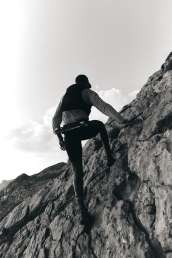

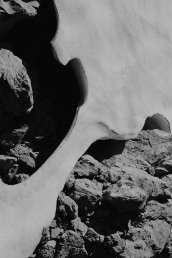

Coming from surf and skate culture, how did you begin to look at running not simply as a discipline, but as a world with its own codes, rituals, and iconography at SATISFY?
“I think it happened very naturally because we never forced it. We did it for real. That is the fundamental difference. Before SATISFY, I photographed campaigns for several other running brands. Usually, I would receive a brief from an agency, travel to a location for two days, and focus primarily on photographing looks, products, with no meaning. What we have always done at SATISFY is much closer to what I had been doing throughout my life. I love trail running. I never run on the road; I am always outdoors. The garments and colours in SATISFY’s collections have always been so inspiring and they often carry a strong relationship with natural elements. In the end, what we do is simply travel with friends. It is not a frantic one or two day production. We might spend weeks on a road trip through Death Valley. Of course, we are there to shoot a campaign, but we are also genuinely living the experience. That is where images begin to emerge, because the experience is real. When you genuinely travel, you encounter things along the way that you could never have planned to photograph. Of course, this kind of approach is expensive. That is also why we try to work with small crews. We try to produce everything in-house. I find that atmosphere incredibly creative.”
SATISFY has built one of the most recognizable visual identities in contemporary running culture. From your perspective, what makes its aesthetic so distinct?
“SATISFY is not a conventional running brand. For me, it’s a subcultural world in running and outdoors. I am working with inspirations that are fundamentally my own and I actively force myself not to follow what other running brands are doing. I stay away from running as much as I can. I find inspiration in travels, magazines, old movies, music videos, and in every possible form of archival and historical imagery. I am very visual driven. The problem today is that everyone seems to be inspired by the same references. We have always tried to move in a different direction. When everyone else is going one way, or to our way, we instinctively move in the opposite one. That is part of what separates us from other brands.
Today, brands need such an enormous amount of content that photographers themselves can begin to run out of inspiration. There is simply too much material being produced. And, as I said earlier, very little happens when someone runs. A runner is simply running. You have to be good enough to generate new ideas and shift the narrative. We love narrating stories, expressing emotions, and constructing a particular aesthetic. There is of course excellent work being produced by other brands as well, and I have enormous respect for some of it and the talent behind it. We simply have an entirely different point of view. We create our own world, and it needs to remain our own.”
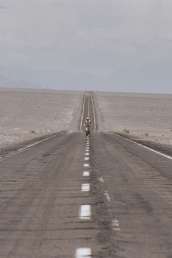
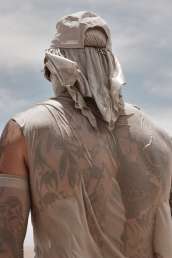

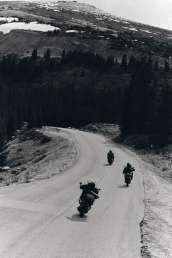
SATISFY’s printed magazine, POSSESSED, feels like an extension of the brand’s inner mythology. What does print allow you to express that digital content cannot?
“For almost eight years, I worked with a publication called Desillusion Magazine, first as a collaborator and later as a partner. It was a European cultural and artistic magazine built around skateboarding, surfing, snowboarding, art and everything surrounding it. I come from print, and that is why the printed objects remain so important to me. The printed magazine offers a form of relief. Images and stories should be printed, because of the texture and materiality they acquire. When you open a book, you also take a break from your work and from the rhythm of the screen. It is entirely different from scrolling through a device searching for inspiration online. A magazine is a tangible object. You can keep it. It possesses value, it can become cult. I feel that one of the problems today is that campaigns, even extraordinary ones, often seem to lose value just after a day. That is why I love POSSESSED. It exists under SATISFY, but we don’t really speak about the brand. Instead, we investigate the strangeness of running and what is happening within this peculiar world, approaching it from a different and much more cultural perspective. Our editor in chief is a goat and truly hilarious. I think print needs to live more fully. It needs to return, and to become increasingly present again. If you want to take a break, get inspired and have a good laugh, read Possessed magazine.”
When you think about the future of running imagery, what would you like to see less of, and what would you like to see more of?
“That is a very difficult question for me because I deliberately avoid looking too closely at the world of running. I genuinely do not know everything that is happening within it, and I am very honest about that. I do not want to look too closely at what everyone else is doing because it can distort my instincts. I actively force myself not to engage with it. For that reason, it is difficult for me to speak on behalf of running imagery as a whole. I can only speak about what I believe in and what we are doing at SATISFY. We are building something so strong that the road I see in front of us is endless.”



Of exploration & curiosity | Katharina Hartmuth
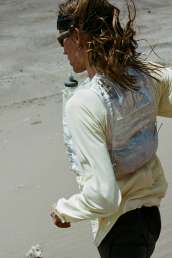
At first glance, climatology and ultrarunning seem to belong to worlds that are hard to reconcile. In reality, in Katharina Hartmuth’s life, they are driven by surprisingly similar principles. Thanks to HOKA, we have delved into the connections that span the two dimensions of her identity, discovering how scientific research and ultramarathon running share, even before a method, the same propensity for discovery
The principles governing scientific research and those defining athletic progression share far more than appearances suggest: observation, method, strategy, patience, data analysis, and the ability to accept failure and work without the guarantee of immediate gratification. In both cases, it’s necessary to invest time and energy in a result that, for a long time, remains invisible; to continue moving forward without knowing for sure whether the process will lead exactly to the imagined place. You might train for months without seeing the hoped-for improvement, just as you might devote weeks to an experiment only to discover it fails to answer the question you started with. The journey rarely follows a linear path; it demands detours, revisions, failed attempts, and fresh starts—much like trail running. Above all, it requires a specific kind of self-belief, essential for continuing to work toward a goal.
This dual perspective has allowed Katharina to pursue a personal journey along two seemingly distinct paths, ultimately making her both a climatologist and one of the most prominent elite ultrarunners on the international stage. It has also enabled her to experience the mountains in ways that are different yet complementary. As a researcher, she studies their processes, interprets data, and uses scientific models to observe transformations destined to unfold over decades. As a runner, however, she physically enters those very landscapes; she traverses them, sensing their temperatures, surfaces, altitudes, and shifts. What might appear in the laboratory as the abstract form of a curve or a projection becomes tangible matter again during a run. Theory thus meets experience; scientific knowledge finds a sensory dimension. For this reason, Katharina Hartmuth experiences the mountain simultaneously as an object of study, a space for research, and a place with which to build a personal relationship.
It is thanks to this parallel that progressively greater distances emerged, along with performances capable of redefining what she herself had deemed possible. This culminated in the Tor des Géants, where a 330-kilometer journey through the Aosta Valley Alps brought her into direct competition with the top athletes in the overall rankings and led her to formulate new hypotheses about her running.


Before the podiums, the records and the long-distance races, what is your earliest memory connected to mountains and running? Was there something in your childhood or upbringing that already pointed towards the person and athlete you would eventually become?
“I would definitely say so. When I was a child, most of our holidays were spent outdoors. The memories I remember most vividly are those connected to the mountains. I grew up in a very flat area, so going to the mountains during the summer always felt particularly special. We would sometimes spend a week or so hiking from one mountain hut to another, and I absolutely loved it. For some reason, I simply felt very comfortable there. I remember always feeling slightly sad when we had to return home to the flat landscape. I climbed quite a lot when I was younger. But sport was never really something in which I was particularly successful. I was not winning competitions. Physically, I was probably a little weaker than the others, so I never developed a particularly strong relationship with the performance side of it. What I loved was simply moving and having fun. Of course I was ambitious—I have always been ambitious—but I was rarely the best.
Even when I eventually started running longer distances, the motivation was initially much more about curiosity. The question was: ‘Can I do this?’ Not: ‘How fast can I do this?’ Then I entered the sport more seriously and began achieving good results. But the success did not come because I had initially set out to become successful. It almost happened as a consequence of wanting to do things as well as I possibly could. I was not entering races thinking that I needed to win. That much more explicit ambition—the desire to win something, to pursue a particular performance—only arrived relatively recently, perhaps four or five years ago. And even then, I think joining HOKA in 2023 was another significant moment. Only when I became part of a team and began living more fully as a sponsored athlete did I realise that there might still be much more potential within me. Before that, it was primarily about adventure. I wanted to know whether I could run 100 kilometres. I wanted to experience it. Of course, that has slightly changed now.”
You are both an elite ultra-runner and a climate scientist with a PhD in climatology. Do you experience those as two separate identities, or have you discovered that science and endurance sport require many of the same qualities—patience, observation, curiosity and resilience?
“Absolutely. I would say this applies to science, but perhaps even more broadly to pursuing a university degree in any demanding field. There is this idea of consistently working towards something without receiving an immediate result. Training is exactly the same. You do not put in the work today and wake up tomorrow with the result you want. You work for weeks, months, years, and eventually something begins to emerge. And the process is never linear. Sometimes you spend weeks working on something and eventually realise that it does not work. In running, you might train consistently and then get injured. In science, you might conduct an experiment and discover at the end that it did not answer the question you wanted to answer, or that something went wrong and you have to begin again. So you need enormous patience with results. At the same time, you have to continue believing that eventually you will arrive somewhere. You have to keep working towards it, simply keep going.
It is very easy to give up when the results in training are not immediate. And it is equally easy to become discouraged in science when you are not immediately finding the answer you hoped for. So even though, superficially, they are two completely different worlds, I think they have a great deal in common. Working towards something over a long period of time requires a very particular set of qualities. And I think the relationship works in both directions for me. Things I have experienced as a runner have helped me in my scientific work. But experiences from science—an experiment failing, for example—have also helped me deal with setbacks in training. The activities themselves are different, but underneath them there are similar processes, and often very similar emotions.”


As a scientist, you understand mountains through data, models and processes unfolding over decades or centuries. As a runner, you experience them through your body, often in their most immediate and physical form. How does moving between those two perspectives change the way you look at a landscape?
“Science gives you a particular kind of knowledge. You understand how mountains formed, how glaciers have evolved. And because my research is closely connected to climate change, you understand how those environments are changing now and how they are likely to change in the future. That gives you a different level of awareness. Most people know that climate change exists, but if it is not something they engage with every day, they may not fully realise how quickly those changes are happening or how many consequences remain invisible to us.
Then, as a runner, you actually go into those landscapes and see it. It is no longer a model or a theory. It is physically there in front of you. That can be incredibly powerful. When you return to Chamonix for UTMB every year, for example, you can literally look at the glacier and see that there is less of it than the year before. And dramatically less than there was five years ago. Climate change becomes immediate. Perhaps my scientific background allows me to understand more clearly what is happening and why. But because I am also physically present in those environments, running through them, the knowledge affects me differently. I know the theory, but I also encounter reality. I feel and experience it.
I also think trail runners are generally more conscious of these changes because we spend so much time in the mountains. We see them first-hand. That gives us a certain responsibility to communicate what we are witnessing. Awareness is particularly important within our sport because these landscapes are not simply scenery for us. They are the places in which the sport exists. I would still like to be running in these mountains forty years from now. So naturally, I hope they can remain as close as possible to the environments we know today.
There is also an interesting contradiction in being a scientist. Scientifically, change can be fascinating. If your model shows something significant changing over the next ten years, that is intellectually exciting. You want to investigate what is happening and understand it. But at the same time, you are conscious of what those changes actually mean. They are not an abstract story and will have real consequences for people and ecosystems. That is the frightening part. Sometimes I have to detach myself from it slightly, simply so that I do not become too emotionally overwhelmed. It is a very delicate balance.”
You finished this year’s Tor des Géants in 67 hours, 10 minutes and 9 seconds, placing third overall. At what point during those 330 kilometres did you realise that you were no longer simply having an exceptional race within the women’s field, but moving towards something unprecedented in the overall classification?
“I am not sure there was one specific moment. I was already in the mix after the first climb, which surprised me because I had not expected to be so close to the very front that early. On the second climb, a few men passed me and moved ahead, so suddenly there was a larger group in front and everything felt slightly more normal again. But quite early, before halfway, some of those athletes began dropping back and I started overtaking them again. Suddenly I was simply in the mix. And honestly, I was never really thinking in terms of being part of the men’s or women’s race. I was just part of the race. Whether the people around me were men or women did not particularly matter. What was strange was that for much of the race I did not even realise how high I was in the overall classification. Nobody is necessarily telling you exactly what position you are in. I think it was around halfway when somebody finally told me I was third overall. From there, a particular dynamic developed. It was exciting to realise that I was so far forward and that an overall podium might actually be possible. The race is incredibly long, so many things can happen. I did not want to spend too much time thinking about it. What mattered to me was simply being part of the race.I was very focused on myself and on my original goal, which was to lower the women’s course record.”


Numbers and data are inevitably part of your life. But if you remove the statistics, what did those three days actually feel like? Which images, sensations or moments remain with you now?
“Of course it was incredibly hard. That is unavoidable in a race like Tor. But I would say it was a very good experience for me. The result was successful, obviously, but more importantly I found a good balance between pushing hard and still feeling relatively good. I suffered, there were moments when the race was so demanding. At one point my feet were extremely painful. But for most of the race, I felt as though I was simply pushing my body while remaining relatively in control. I was doing my thing. For actually eighty percent of the race, everything felt surprisingly smooth. Nothing became exceptionally bad. Even towards the end, I still felt that I could push. That actually surprised me. When I ran Tor two years earlier, I felt dramatically worse towards the finish.
There is also an enormous emotional journey within a race like that. You reach certain places and remember what happened there the previous time. You arrive halfway and realise that you have crossed this major threshold. You climb onto a mountain and suddenly there is an extraordinary sunrise or a particular atmosphere in the early morning. And in those moments, you remember that although you are racing and pushing extremely hard, you also need to experience where you are and enjoy it. Because that is part of why you are there. Those are the memories that remain. This year, because almost everything went well and I never had any truly serious problems, I think I was able to appreciate those moments much more. Without ever really taking my foot off the gas.”
There will be young girls entering trail running who see your name not only at the top of a women’s classification, but among the first athletes overall. What would you like them to understand from what you have just achieved—not simply about performance, but about the space they are entitled to imagine for themselves within this sport?
“My biggest hope, for women in general, is that women and girls learn to believe in themselves more. And to use that belief to aim high. To have ambitious dreams and then actually try to pursue them. Perhaps, consciously or unconsciously, they think: ‘I am a woman, maybe that is not something I should do’. But if they genuinely want to do it, if that is their dream, then I hope they go after it. I did not even know whether I was capable of what I achieved. But I wanted to find out, so I tried. I was not afraid of failing. Because I knew that if I failed, I would learn something. Then I could return the following year and try again. I really hope performances like this can inspire women and girls to believe more strongly in themselves and not allow somebody else to tell them that those things are impossible. Unfortunately, I think that still happens far too often. Women often need more encouragement. Yet quite frequently, what they receive instead is discouragement. And really, what is the worst thing that can happen? Perhaps it does not work. That is all. It is not a life or death situation.”


Ultra-running is often portrayed as an individual pursuit, yet performances of this scale depend upon an entire ecosystem of people, knowledge and equipment. What has HOKA’s support meant in your development as an athlete, and how important is it to have a global trail-running brand willing to believe in the projects and ambitions you want to pursue?
“It has changed an enormous amount for me, overwhelmingly for the better. First of all, the support simply makes many things possible. It allows me to concentrate on running without having to do fifty other jobs just to sustain myself. That is a huge privilege. Working with a global brand also opens doors. You can travel to places you might otherwise never have visited because perhaps you would not have had the money or the connections. So the material and financial support are obviously enormously important. There is no question about that.
But for me, what may be even more valuable is the team itself. I am incredibly happy with the group of athletes we have now and with the people I am able to work with, also the managers and everyone else within the brand. That exchange is invaluable. I learn so much simply by watching other athletes, observing how they approach certain things and speaking with them about their experiences. There are certain situations you simply do not encounter unless you are living inside this world. So having people around you who understand those things is incredibly important. Being part of that environment has also given me a new level of belief in myself. Even this year, there were things I changed because I had observed other athletes. That creates inspiration. When I compare the athlete I was before joining HOKA with the athlete I have become through being part of that environment, they feel almost like two completely different people.”
Scientific research is built around unanswered questions. Ultra-running seems to possess a similar quality: there is always another distance, another mountain, another limit whose meaning remains unknown until you encounter it. In that sense, what do you want to discover next?
“That is always a good question. What excites me most now is discovering how good of an athlete I can actually become. There was a period, one or two years ago, when I had already achieved quite a lot. I had raced well. I had some major results. And I started asking myself: ‘What is still motivating me? What comes next?’ Eventually, I realised that the next challenge was to professionalise myself even further. To change the way I approach racing. Historically, I raced very conservatively. My priority was always to make sure I reached the finish line. But this year, I have started taking more risks and I felt that it brought me to another level. At the same time, I still feel as though I am only beginning to open that box and discover how much potential might still be inside it. That is what excites me now. For the past few years, I was still working almost full-time as a scientist alongside running. Now, I can devote almost all of my time and attention to running. That is completely new for me. And it immediately creates new possibilities. I can structure training differently. I can give my body the time it actually needs. So I have this sense that there are still several steps I can take. I do not yet know exactly where they will lead, but that is precisely what makes discovering them so exciting.”


The Red Scorpion's Return | Castelli and the Tour de France
An exploration of Castelli’s creative universe with Product Line Manager Andrew Montgomery, spanning 150 years of cycling heritage, a culture of innovation, and the Red Scorpion’s historic return to the Tour de France
Few symbols, in sport or beyond, possess the historical resonance of the Maillot Jaune. Since 1919, its unmistakable yellow has accompanied the monumental achievements of cycling’s greatest icons, acquiring an almost mythological stature over time. Between 1989 and 1994, Castelli’s equally legendary Red Scorpion became part of Tour de France history, adding its distinctive mark to the yellow jerseys worn by champions such as Greg LeMond and Miguel Indurain. Today, in the very year that the Italian brand celebrates its 150th anniversary, the Red Scorpion announces its return to the Tour, opening a new chapter in a truly extraordinary sporting and manufacturing tradition.
At Castelli’s headquarters in Fonzaso, at the foot of the Dolomites, this ever-evolving heritage takes on a tangible dimension. Skilled hands, fabrics, state-of-the-art machinery and prototypes set the rhythm of a creative environment devoted to cycling, where artisanal expertise meets the most advanced aerodynamic research. It is within these spaces that the new Maillot Jaune Collection has taken shape, as part of a broader partnership with A.S.O. that, from 2027 onwards, will see Castelli produce the classification leaders’ jerseys for the Tour de France, the Tour de France Femmes and a constellation of other competitions associated with the Grand Boucle.
We travelled to Fonzaso to meet Andrew Montgomery, Castelli’s Product Line Manager, and explore the human and creative dimensions of this historic reunion, beginning, as is customary in our editorial approach, with his personal story: from his almost accidental introduction to cycling and the cultural influences that inform his vision to the intricate design process behind a garment, or rather, a collection of garments, that have become manifestos in their own right. Against this backdrop lies a remarkable personal coincidence: in 2027, the Tour de France Grand Départ will bring Montgomery back to his native Scotland, precisely where his connection with the sport first began.


Growing up in Scotland, what first drew you towards the sport, and which figures, images or experiences contributed to shaping your personal understanding of its culture?
“It’s quite funny to think that the Tour de France will start in Scotland next year. In a way, it feels as though things are coming full circle. My relationship with cycling really began with two particular moments. The first encounter happened when I was still at school. I didn’t enjoy school at all, to be honest. My English teacher, Mrs McFarlane, must have noticed me sitting at the back of the classroom, staring out of the window. One day, she told me that I had to write a report, and gave me a book to read. It was Lance Armstrong’s autobiography, ‘It’s Not About the Bike’. I went home and read it from cover to cover in one sitting. That was my first real encounter with cycling.
The second moment came when I was about 18 or 19, working in a bar. It was very much a football bar, with football playing on all the televisions. But there was this regular customer called Peter who would come in every lunchtime during the three weeks of July and ask us to put on the Tour de France. I remember thinking, ‘Who is this guy? Nobody here wants to watch cycling…’ He would sit at the bar and explain everything that was happening in the race. He would point out the breakaway and tell me not to worry because the riders would eventually be caught, explaining that they were out there to get some television exposure. Essentially, those three weeks became an education in the Tour de France. That was when I really started to enjoy the sport.
Later, I moved to London and began working for Paul Smith, who, of course, is a huge cycling enthusiast. He would often drive up to the store I was managing, stop by on his way home and spend half an hour talking to me about cycling. I remember conversations about going to Lombardia, and how enthusiastic he was about the race. He was really excited to talk about specific races even when he couldn’t attend because of other commitments. I would say that it was during my time in London that I became genuinely immersed in the sporting side of cycling. Before that, my connection had developed almost by chance, first through my teacher and then through those conversations with Peter at the bar.”
After working with some of the most influential names in cycling apparel, what ultimately led you to join Castelli? And how would you describe your creative vision within the company?
“I joined Castelli two years ago, after having been fortunate enough to work for some of the biggest cycling apparel brands in the world. I’ve known Steve Smith (Global Brand Manager Castelli Cycling) for a long time. It’s a very small industry, and particularly when you live in the same town, Bassano del Grappa, you tend to cross paths quite often. We’ve always had a great deal of mutual respect. Deep down, though, I think I always knew I would eventually end up at Castelli. Even when I first started working in the industry, almost 15 or 16 years ago, there was something telling me that this was where I would end up. I’ve always been just as interested in the performance side of cycling apparel as in its aesthetics, and Castelli’s history and DNA have always been incredibly important to me. So, after spending around a lot of years working my way through the industry, Steve approached me and asked whether I wanted to join Castelli. I remember thinking, ‘You know what? I think the time is right.’ And it really was. Had the opportunity come at a different stage, whether because of the role itself or where I was in my professional journey, it might not have felt quite right. Castelli was also looking to make some subtle changes to the way the brand presented itself visually, so the timing was perfect.
Creatively, I don’t necessarily see myself as a creative person in the traditional sense. I work with incredibly creative people, but I would describe my role more as that of a curator. I’m bringing different creative elements together. I don’t know how to use Photoshop or InDesign, and I’m surrounded by talented people who do. My job is to bring those different contributions together and shape them into collections that work. I suppose I am creative in my own way, but what’s interesting is that I don’t really surround myself just with cycling when it comes to finding inspiration. Of course, I follow the sport, but it’s rarely where I look for creative references. I watch a lot of football, go to football matches, listen to music and watch films. Guy Ritchie, Skepta: whatever happens to be occupying my mind at a particular moment can find its way into the collection I’m working on. It’s funny because whenever I present a collection, I’ll often go home and ask myself: ‘If this collection were an album, which album would it be?’ That’s genuinely how I approach the creative process. I don’t follow other cycling brands on social media, and I very rarely visit their websites. My inspiration tends to come from entirely different places.”


To what extent has experiencing cycling firsthand become essential to your work, and when did you begin to feel that you truly belonged to this world?
“I honestly really feel that I’ve found my place in the world of cycling. Looking back at my school days, whenever a teacher asked me what I wanted to be when I grew up, working in cycling was never something I imagined. Even 15 years ago, I would never have thought I’d end up in this industry. So, to be where I am today, having worked on the Yellow Jersey of the Tour de France, is pretty special. At the same time, I’ve always felt a bit like an impostor in the cycling industry. You’d turn up at Strade Bianche or find yourself in the VIP area at the Tour de France wearing leopard-print shoes, looking completely different from everyone else… I remember being at the Dubai Tour in a leather jacket, and people looking at me as though I’d wandered into the wrong place. They probably wondered whether I actually worked in the industry. So, for a long time, I carried that slight feeling of being an outsider. But it’s really only since joining Castelli that I’ve started to feel differently. There’s been this realization that, actually, I do belong here. This is where I’m supposed to be. This is home.
Of course, to do my job, you have to ride a bike. When I stand up in front of our international sales network to present a collection, there are more than a hundred people watching me explain the aerodynamic properties of a new jersey or the seat pad we’ve spent the last two years developing. Those people need to trust me. You can’t stand on stage and talk about something you haven’t experienced yourself. I remember when we were developing a couple of new jackets. It would get to five-thirty or six in the evening, and outside it would be pouring with rain, with thunder and lightning. The colleagues in the office would be getting ready to leave, and I’d tell them I was going to ride the 50 kilometres home to Bassano. They’d look at me as though I were crazy. ‘Have you seen the weather?’ And I’d say, ‘Well, who’s going to test the jacket?’ So they’d all get into their cars and drive home, while I’d be riding out of the gates wearing the jacket we were developing.
Even in winter, I’d ride up here in temperatures of minus five or minus eight degrees, particularly when crossing the hills near Incino. I’d arrive at the office absolutely frozen, sitting at my desk and shaking from the cold. The others would see me and go into the kitchen to make me a cup of tea so I could warm up. That’s because I genuinely believe you need to be a cyclist to do my job. Even with the Tour de France announcement… I’d known about it for almost a year, but I couldn’t tell anyone. Only a handful of people in the office knew. Meanwhile, I was taking part in all these cycling events. I went to Paris-Roubaix and rode 145 kilometres over the cobbles. I also did L’Étape du Tour, 180 kilometres with 5,000 metres of climbing. So yes, being a cyclist is essential to what I do.”
How does the relationship between craftsmanship and technological innovation manifest itself within Castelli’s work? And how important are the people and expertise behind each garment in defining the brand’s identity today?
“For our Spring/Summer 2027 collection, we held the sales meeting in Milan, and one of the new product groups we presented was really about showing the world what the professionals in our development team do every day. I see their work firsthand, and it genuinely inspires me. I’ll walk past their workspace, watch what they’re doing and then return to my desk thinking about how we can communicate that extraordinary level of talent to the people who eventually wear our products. Because I genuinely believe there are people out there who think cycling jerseys just grow on trees or fall out of the sky. They don’t necessarily realize how much work goes into making a single garment.
There was one jersey in particular that took us an incredibly long time to develop. We were trying to bring three different fabrics together and make them function as one, but they simply wouldn’t cooperate. It was an extremely difficult process. We’d spent so much time working on that jersey, sometimes staying until seven in the evening, going through three or four rounds of prototyping. There were moments when we were almost in tears because of how much it meant to us to make it work. And then, finally, there it was, on stage in front of a hundred people. I had to find a way to communicate everything that had gone into creating it. We produced a beautiful video showing Nadia, a member of our development team, working on the garments, and that became a central part of the presentation. Because if I can’t communicate that emotion to the people in the room, how can I expect them to communicate it to anyone else? They’re the ones who will eventually be selling the product. So, for them to see me getting emotional on stage over a cycling jersey, I think that says something about how special the whole process is.
And then there’s the innovation side of things. My very first day at Castelli wasn’t spent here in the office. We went straight to the wind tunnel at the Politecnico di Milano with Filippo Ganna. In my previous 15 years working in the cycling industry, I’d never even seen a wind tunnel. So, to find myself there on my first day was like being thrown straight into the deep end. Suddenly, you’re operating at an entirely different level. And I immediately understood that this was the DNA of Castelli. You take the world’s best athletes, put them in a wind tunnel and try to make them faster.”


How does the responsibility of preserving such a legacy influence your approach to work today? And in which ways do you aim to evolve Castelli’s distinctive identity?
“I keep thinking back to that presentation we did in Milan in May. Vittorio Castelli, Maurizio Castelli’s son, was sitting in the front row. And there I was, standing on stage talking about the brand’s heritage, its innovations and its DNA, with the next generation of the Castelli family watching me. There’s probably no greater pressure than that when it comes to keeping those values alive. I have enormous respect for that heritage. You see it in products like the Gabba, which have become such an important part of the brand’s identity. And you see it in the expectations of the professional riders we work with. Their standards are incredibly high, and they’re constantly in touch with us. Even riders from other teams reach out. That says a lot about what Castelli represents within the sport.
I’ve always been aware of that legacy. Growing up, the Red Scorpion was already an iconic symbol to me. When I lived in London, I wore a lot of Castelli clothing, so I was very familiar with the products long before joining the company. I also spent five years living in Dubai, where I regularly wore Castelli’s Climber’s jerseys and the original Free Aero shorts. I’ve had a personal connection with the brand for a long time. It’s a special company. We celebrated 150 years this year, and there aren’t many brands in the world that have been around for that long. In my opinion, there’s a fundamental question: do you want to follow a trend, or do you want something that never really goes out of style? After 150 years, Castelli has an identity of its own.”
What does the reunion between the Red Scorpion and the Maillot Jaune represent for Castelli, particularly in the context of its 150th anniversary, and what does it mean to you personally to contribute to such a historic moment?
“It’s massive. I remember it was around this time last year when they asked me, ‘Do you want to do the Tour de France?’ And I thought, well, that’s pretty special. I love the Giro d’Italia, and I think the Maglia Rosa is an incredibly special jersey. But the Yellow Jersey is something else. The Tour de France is the most watched annual sporting event in the world. More people watch it than the Super Bowl. So, to have the Red Scorpion on the Yellow Jersey is beyond special. The hardest part was having to keep it a secret for so long. Even getting a Yellow Jersey through the sample room was complicated. We had to work on it at night to make sure nobody found out.
Last week, when we made the official announcement in Paris, I was at the ASO offices. And, to be honest, I don’t think the magnitude of it has really sunk in yet, either personally or in terms of what it means for Castelli. It’s a huge statement for the brand. It’s like saying, ‘We’re back at the very top of the sport’. There is no more iconic jersey in cycling than the Maillot Jaune, so having the Red Scorpion on it again is incredibly important. I think it will only really sink in when I finally get to see the jerseys at the official presentation. As for the Tour starting in Scotland, that’s going to be huge for me. There’s actually a bar in Edinburgh called the Tourmalet, which could be a fun place to go and have a few beers to celebrate. But seriously, to think that I went from working in a pub in Scotland, with that one customer coming in every day asking me to put the cycling on television, to returning there almost 18 years later as part of the team responsible for the Tour de France’s Yellow Jersey… That’s pretty incredible. I really need to find that guy from the pub!”


Talking about the creative vision behind the new leader’s jerseys and the wider collection inspired by the Tour de France, what were the guiding principles and goals behind your approach?
“One of the things I said to the team when we found out we would be responsible for the Yellow Jersey was that everybody already knows the colour. When you watch the Tour de France on television, you immediately recognise that yellow. But what I really wanted was for people to look more closely. When you see a close-up of the race leader wearing the jersey, I wanted you to be able to recognise the different fabrics and technologies that have gone into making it. For me, it was incredibly important that the jersey became more than just a colour. I wanted it to represent the pinnacle of innovation within the sport, particularly in terms of fabrics and technical development. We also did something quite interesting with the colour itself. To make the jersey even more distinctive, we introduced a special pigment into the yellow. Under UV light, particularly when you take it outside into the sunlight, the colour really comes alive. It almost becomes a fluorescent, shock yellow. I thought it was pretty cool that we were allowed to experiment with something like that.
Of course, designing for the Tour de France involves a huge amount of responsibility. You’re working on four classification leader’s jerseys, and each has its own sponsors, whose identities and requirements you have to respect. There are conversations about how far you can go creatively, what can be changed and what needs to remain consistent with each brand’s corporate identity. That process was actually a lot of fun, particularly with the new White Jersey, because it was almost a blank canvas. The sponsor was coming in at the same time as us, so there was an opportunity to explore new colours and ideas together. For example, we had some interesting conversations with Škoda about the Maillot Vert. I remember meeting them privately in Barcelona, around the start of the Tour, in this little restaurant hidden away down an alley. Everything was still confidential at that stage.
But the project goes far beyond the four leader’s jerseys. We developed a collection dedicated to the Grand Départ in the UK, and we also had the opportunity to create designs inspired by iconic stages of the Tour, including a special-edition Paris jersey. Then there’s a jersey we called Graffiti, which is particularly close to my heart. One of the things that makes cycling so special is the proximity between the athletes and the fans. You can get incredibly close to the riders… You can’t just walk into a changing room after a World Cup final and say hello to Lionel Messi, but you might catch a water bottle thrown by Tadej Pogačar during a race. That relationship is unique to cycling. So we created the Graffiti jersey as a tribute to the fans and to the messages they paint on the roads during the Tour.
And then there are all the amateur cycling events associated with the Tour, what we would call ‘Gran Fondo’ in Italy. Across the different events, I think there are something like 80,000 participants. So you’re creating products that will reach an extraordinary number of people. The visibility is almost beyond comprehension. It’s not just about the four iconic leader’s jerseys, but everything that surrounds them. We also worked on the Tour de France Femmes collection with Zwift, which was an interesting experience. Initially, I was told that Zwift would be heavily involved in the design process, and I assumed that meant they would be doing the design themselves. But that wasn’t the case at all. I told them I had some proposals if they wanted to see them, and they loved them. It turned out to be a really enjoyable collaboration. They’re a fun, energetic company with a very bold approach to colour, so some of the jerseys we developed are pretty wild. And, of course, there are the children’s jerseys as well. The whole project involves so many different products and audiences. It’s an enormous creative undertaking.”
As Castelli celebrates its 150th anniversary, does its return to the Tour de France mark the beginning of a new era for the company?
“That’s exactly how we see it. We had an internal meeting a couple of weeks ago where we told everyone that we were going to be working with the Tour de France. And that was precisely the message: the first 150 years were part one, shall we say. Now we’re writing another chapter in the book. Everything up until 2026 represents those first 150 years of Castelli’s history. And then year 151 begins with Castelli returning to the Tour de France, which is massive. That’s how everyone within the company sees it.
There’s an incredible amount of energy around the company now that people know what’s happening. People are finally starting to understand what that Yellow Jersey was doing around the office… Of course, we’ve also had to hire additional people because it’s such a major undertaking. And seeing them come into the company, bringing their own enthusiasm and energy to the project, has been really positive. There’s definitely a great sense of excitement throughout Castelli at the moment, and for our future.”


One Step Further | Evolution in Chicago
Alongside Cisalfa Sport, we accompanied and documented the Cisalfa Run Crew's experience at one of the world's most legendary Majors: the Chicago Marathon. The culmination of a journey both individual and collective, months in the making, driven by a shared desire to run towards a new version of themselves
Beyond the thirtieth kilometre, the questions become existential rather than athletic. One step further, they tell themselves. One step further, amid a convergence of reflections and sensations, shared yet profoundly personal. The feeling of entering a liminal space, a threshold of transformation: a moment long anticipated and meticulously prepared for, in many cases already experienced, yet always difficult to decipher.
Ultimately, this is what it’s about. Questioning yourself. Finding answers, adding them to those already gathered, step by step, along the way. Meanwhile, Chicago and its striking urban morphology, swept by restless winds, fill the atmosphere with impressions, giving shape to the essence of a cult Major. Along its broad avenues, the centre of the world for an entire day devoted to 42 kilometres and their transformative power, the inner and outer movements of the Cisalfa Run Crew begin to align. Just as they have learned to do throughout months of shared preparation, of fears confronted and burdens worked through together, hand in hand, conversation after conversation. Of ambitions first imagined, then refined through the rigorous discipline of training and the value of human connection.
Their bodies drift into uncharted territory: that of transformation through challenge, shaped by the singular art of the marathon. By its ability to make you feel secure and vulnerable at once, and by the preparation required to experience an event of this magnitude in its fullest sense. All around the Cisalfa Run Crew, runners from every corner of the world are immersed in the same process, the same pursuit. Then, dazzling, comes the finish line. And with it, a moving, proud awareness. Independent of times and performances. Rooted entirely in the experience. The awareness of a new version of yourself, still unknown 42 kilometres earlier. Months before, perhaps not even imagined. An experience distilled into a universal concept: Run to You. Running as a muse capable of transforming entire lives. Forty-two kilometres at a time. One training session after another.
Through the lens of RiseUp Duo, the Cisalfa Run Crew’s experience at the Chicago Marathon comes into focus.


Of Purpose and Will | ‘Why Do It?’
There are questions that arise over the course of a lifetime without offering a single, definitive answer. Questions whose importance does not necessarily lie in the possibility of resolving them, but in the very act of continuing to formulate them. Because, whatever conclusion they lead to, they end up attributing meaning to what we do. It is from this premise that ‘Why Do It?’— a short film directed by David Leon Fiene and starring Erin Stuckenbruck — takes shape
A seemingly essential, yet radically universal question, that David Leon Fiene chooses to explore through cinematic language, deliberately avoiding the need to formulate a definitive answer. Combat sports, in this specific case Muay Thai, become the medium through which to express this question.
Why train every day? Why embrace the struggle? Why fight? These questions transcend the specifics of any single discipline; they permeate—in various forms—every athletic pursuit rooted in sacrifice. For Erin Stuckenbruck, athlete and teacher, choosing Muay Thai as a platform to address these questions means consciously accepting a state of permanent difficulty; entrusting the body with the task of becoming an instrument of knowledge through which to understand the world and, simultaneously, redefine one’s perception of oneself.
Fighting, in the film as well as in Erin’s personal interpretation, is not so much a clash against someone else, as an intimate and incessant negotiation between instinct and consciousness, reaction and meditation. A practice through which to set limits and build a deeper form of personal security. The ring—much like a gym’s tatami mat—thus becomes a defined space where fear, vulnerability, and control take physical form, allowing us to emerge with a renewed realization that stays with us in our daily lives.
From childhood to the present day, what kind of relationship have you developed with the imagery and imagination of sport? In what ways has sport shaped the way you see the world? And, conversely, how did visual storytelling first enter your life?
David Leon Fiene: “To be honest, Why Do It? was one of the first projects in which I really began to explore sport in a deeper way through film. Most of my previous work had been centred around cultural documentaries, fashion films and commercial projects, so I was already interested in combining different worlds aesthetically. If I think back to childhood, the first real connection between sport and filmmaking probably came through skateboarding. Like so many people, I would film my friends skating. And I think skateboarding became an early way of exploring identity through something that existed slightly outside the mainstream. There is a similar quality in Muay Thai. They are both environments with very particular codes, communities and ways of seeing the world. That curiosity eventually became the basis of how I approach filmmaking in general: looking for stories, asking questions and always trying to bring a visual or aesthetic curiosity into the process.
A few years ago, I started training Muay Thai myself. Almost immediately, I felt there was something there that I wanted to film one day. There were the mental aspects, the philosophy behind it, the people I met and their stories. But there was also something extraordinarily visual about the sport. The gestures, the rhythm, the discipline, the atmosphere.”
And what about you, Erin? Was sport something that had always been part of your life, or did it gradually become something deeper? And why Muay Thai? How did your relationship with fighting begin?
Erin Stuckenbruck: “Since I was a child, I always loved moving, especially dancing. I played different sports throughout school, but I never really identified myself as an athlete. Sport was something I did as a hobby. My identity was much more intellectual. I studied mathematics, so I always thought of myself as being more on that side of things. Then, around five years ago, when I moved to Barcelona, I discovered Muay Thai almost by accident. I had friends who were training, and they asked whether I wanted to join them.
At the beginning, because I had danced so much growing up, Muay Thai immediately felt almost like a form of dance. It was extremely technical. It was beautiful. You have to be completely present and deeply connected to your body. Every tiny movement flows into the next. At that stage, I was not interested in fighting at all. In fact, I was quite uncomfortable with what I perceived as the aggressive side of Muay Thai. I saw it much more as an art form, a beautiful martial art, than as a combat sport. Then, probably around a year into training, I began to advance, spar more seriously and actually get hit. And that changed something. I think martial arts, like many sports, begin to mirror aspects of your life. Suddenly I was being hit and realising that it was triggering things I had buried very deeply inside myself. Things I had almost forgotten about for years. There was a defining moment when I realised I had to choose. I could continue fighting—literally and metaphorically—and confront those things as they came up. Or I could stop and turn away. I chose to keep going. And particularly for women, I think that can be incredibly significant. Many women have experienced some form of sexual or physical violence. Combat sports can bring those memories or sensations back in very direct ways. You get hit. Someone shouts at you. You are pushed to express anger. It became a way of learning how to establish boundaries. There are so many layers to it. Even now, five years later, certain things can still trigger me. But alongside my progression in Muay Thai, I could see a parallel progression within myself. My mental strength changed, my confidence.”


Let’s talk about ‘Why Do It?’. As you mentioned, the film emerged through a collective process between the two of you. How did you first meet, how did your relationship develop, and when did you realise there might be a film within it? And how did the people around you ultimately help shape the project and make it possible?
David Leon Fiene: “I actually started training with Erin. She is one of my coaches, together with Pablo, and they run this amazing gym in Barcelona called Ruckus Athletics. I started training there around three years ago, when the gym itself was still developing and they did not yet have their own permanent space. I think Erin may actually have been the first person I met there. She really opened the sport up to me.
I had started Muay Thai mainly because I wanted to challenge myself. I had never imagined myself practising a martial art or combat sport. And Erin was incredibly warm and kind from the beginning. There was something slightly unexpected about that because you see how intense the training environment can be, and then you speak to Erin and encounter this completely different energy. I felt a connection immediately. From there, the relationship developed very organically through training. At some point I suggested that it would be interesting to film it and go deeper into the story. Even before shooting ‘Why Do It?,’ we made a small internal documentary with different members of the gym. We spoke about what Muay Thai meant to us and how training affected our lives beyond the gym. That was probably an important step for me because I began to realise there was something larger happening here. There was more to explore.”
Erin Stuckenbruck: “I remember that during David’s first few months of training, we went for a coffee either before or after class. He was going through a tough time, and told me that part of the reason he had started Muay Thai was to feel better about himself and rebuild some confidence. I think that opened up this conversation between us about Muay Thai having an effect far beyond the gym. David was also beginning to establish himself more seriously as a freelance director. He would say that Muay Thai was actually making him more confident. Having an outlet where he could train hard, and express himself physically meant that on set he was calmer, communicated more clearly, and felt more at ease leading a room. So from relatively early on, there was always this dialogue between us. We were both interested in what was happening beyond the mats. How does training translate into your everyday life? What changes outside the gym because of what you experience inside it?I think those effects probably happen to everybody who trains. But not everybody necessarily reflects on them consciously. And perhaps even fewer people feel the need to make art from that experience or communicate it outwardly.”
What do you think happens when sport meets cinema or another artistic language? What can art reveal about a sport, and specifically about Muay Thai, that might allow people to look at it differently?
Erin Stuckenbruck: “The first thing that comes to mind is that, before I became deeply involved in sport myself, I had quite a stereotypical idea of athletes. It felt almost like a very basic world of going to the gym, getting strong. It seemed less intellectual to me. And I think films like David’s, or other artistic representations of sport that approach it thoughtfully, open a completely different window into what sport actually is. If you have never trained seriously, if you have never considered yourself an athlete, it can be difficult to understand that depth. That was certainly true for me. I remember thinking athletes were slightly crazy or perhaps not particularly reflective. But in reality there are so many layers. There is psychology. There is struggle. There is the search for confidence. There is expression. An entire relationship with the body. There are countless reasons. And representing sport through art gives you a way to reveal those dimensions.
Another aspect I find important is avoiding the conventional narrative where somebody starts at the bottom, suffers, works incredibly hard, then has a fight, wins, and suddenly everything is resolved. That is not really what ‘Why Do It?’ is about. The reality is cyclical. Some days feel incredible. Other days you are simply pushing through. Everybody carries their own struggles. And I find it much more interesting to represent that without necessarily over-explaining it. To express it metaphorically.To let people feel it rather than tell them exactly what they are supposed to understand.”
David Leon Fiene: “On a more visual level, I think there is something incredibly powerful in simply giving the movement the attention it deserves. Take a Muay Thai kick. Everybody knows what a kick looks like. But when you train, you understand how much work goes into producing a genuinely good one. Repetition, technique, timing, there are so many small elements behind a movement that eventually appears completely effortless. Cinema gives you the possibility of honouring that. You can frame it carefully. Light it in a particular way. Slow it down. And suddenly you begin to see the kick for what it actually is: a highly refined piece of physical art.”


Muay Thai is often perceived from the outside primarily through violence and aggression. ‘Why Do It?’, however, seems to search for almost the opposite: a particular state of mind. What did you want to communicate about the sport through the film?
David Leon Fiene: “There is one example I always return to because, for me, it explains a lot. When we spar, we rotate partners every round. So in one round you might be facing somebody who is relatively new. In the next, you might be facing someone far more advanced than you. They might be taller, smaller, stronger, faster. Every round presents you with a completely different situation. And your confidence changes accordingly. Against one person, you might feel extremely comfortable. Then suddenly, one round later, you feel completely exposed. The challenge is learning how to manage both states. And I think that translates directly into life outside the gym. You encounter different personalities, different power dynamics, different environments. Depending on who you are with or where you are, you can feel completely different inside your own body. Muay Thai teaches you to observe those reactions and regulate them. For me, the gym becomes this little environment in which you constantly learn how you respond to different situations. And, through that, you begin to understand yourself better.”
Erin Stuckenbruck: “I remember the first time I watched Muay Thai or boxing and thought it was difficult to watch. It looked violent. There was blood. There was obvious aggression. But as I learned Muay Thai, my perception changed completely.
One of the hardest things about sparring is that sometimes somebody could punch you very hard in the face. And your immediate emotional reaction could be extreme. Perhaps you want to cry, or you become furious and want to attack. There is this instant where your whole emotional state rises. That is exactly the moment when you have to recognise what is happening inside you. You almost have to meditate within the fight, to regain control. Muay Thai is also deeply connected to Buddhist traditions, so this sense of duality runs throughout the art. There is aggression, but there is also calm. You get hit then you breathe and instead of reacting blindly, you respond with technique. That process translates enormously into your mental state outside the gym. Whenever you encounter conflict or your emotions begin to take over, you become more capable of creating a distance between the feeling and the reaction.
Now, when I watch a Muay Thai fight and I see somebody taking an enormous shot, then simply breathing, regaining composure and responding technically, I see something completely different from violence. There is so much beauty in that exchange. At the end of Muay Thai fights, the athletes embrace. They bow. There is a deep respect for the person standing opposite you. In some ways, it almost feels as though you sparred mentally as much as physically.”
Erin, Muay Thai is obviously both a sport and a profession for you. In the film, however, it seems to represent almost an artistic language through which you understand yourself and the world around you. Have you ever thought of Muay Thai as an art form in that sense? And after seeing the film, did you begin to perceive yourself not only as an athlete, but perhaps also as an artist?
Erin Stuckenbruck: “When I first started training, I always described it as a dance. That was my immediate connection. Even now, when I watch Muay Thai, I see so many parallels with other art forms. I also studied music and used to perform in concerts, and although those worlds are obviously very different, the process feels remarkably similar. The hours of practice. The attention to detail. Technique and transitions. Repeating something again and again until it becomes part of you. And then, fight, or perform. So yes, I see Muay Thai very deeply as an art form.”


The title of the short film already contains the tension and the fundamental question driving the entire production. As the director, why did you choose it as the title? And what is your own personal answer to that question?
David Leon Fiene: “Even if you have no connection to Muay Thai or martial arts, I think you can immediately relate to the question from the outside. Why would somebody train this hard? Why would somebody willingly choose to fight? And from there, you begin entering all the different layers. Erin wrote this beautiful text about her own answer to that question, and throughout the process of making the film I felt that she was genuinely working through it herself. But for me, in a way, the film is also about leaving the question open. Almost dropping it into the space and not necessarily expecting a final answer. The question itself does not really lead to one definitive conclusion. That is also why the final line of the voiceover is: ‘Why stop now?’ Then Erin laughs. That laugh was a very important detail for me. Until that point, the film has this sense of progression—moving upwards, fighting, training, overcoming yourself. Everything suggests growth and resilience. And then, at the very end, she almost laughs the whole thing away. Suddenly you are back at the beginning. I wanted to play with that tension. There is all this depth within Muay Thai, but at the same time, there is also lightness. There is playfulness. Perhaps, in the end, the answer is simply: Why do it? Because we love it. And if you love it, why stop now?.”
And Erin, as the protagonist of the film, what message or, what possible answer to the question posed by the film, did you want to communicate, or hope the audience might take away from it?
Erin Stuckenbruck: “It has actually been a recurring question in my life for quite a while. Throughout the months of making the film, I kept asking myself that. And even now, I am in fight camp again. I have another fight in a couple of weeks, and I still ask myself the same question almost every day. I think the answer changes constantly. When we made the film, I wrote a kind of poem about why I do it. A lot of it came down to this idea of consciously choosing struggle. I am deliberately placing myself in something difficult. And because I have chosen that difficulty, I also have the possibility of pushing through it. Nobody else is forcing me into it. I am choosing the hardship because I understand what it can give me. I think everybody has a completely different answer, but through speaking with David and with other people throughout this process, I realised how important it is to ask yourself that question. Because the answer gives purpose to what you are doing. Otherwise, you can very easily end up moving through something without really knowing why. It does not have to remain the same either. It can change and evolve. You can have several reasons. But once you begin understanding them, the training itself becomes more profound. The practice becomes deeper. And that sense of purpose is what gives you the motivation. Everybody has to find something personal and not necessarily need a beautiful sentence explaining why.”


Emotional Catalyst | The Koshien Baseball Tournament
In Japan, during the summer Koshien tournament, baseball becomes the tangible starting point for something far more significant than a mere sporting result. An event that tells the story of dedication, that of hundreds of young people, of respect for traditions, linked to the long love story between baseball and the land of the rising sun. And, above all, of the intense passion with which an entire nation can experience a sporting event. Let us revisit this year’s tournament through the evocative narrative and visual lens of Mauro Puccini
Mauro Puccini has been working in the world of photography for years and, during his summer holidays, he often travels to Japan, where, together with his family, he has the opportunity to immerse himself in the relaxed pace of Japanese daily life. Yet, his gaze had never rested upon baseball, a sport that had never held any particular appeal for him. That changed one sweltering summer afternoon when, turning on the television, Mauro happened to catch a game of the Koshien tournament, and suddenly, everything began to take on a different meaning.
Japan’s National High School Baseball Championship, commonly known as the ‘Summer Koshien,’ is an annual, nationwide high school competition. Considered the most important amateur sporting event in the country, it brings together 49 schools from different Japanese prefectures in a series of knockout matches. A whirlwind of emotions, a rite of passage, a last chance for millions of young Japanese to experience sport in its most all-encompassing form, before adulthood imposes compromises, responsibilities, and divergent trajectories.
Mauro Puccini immediately understood that the uniqueness of this tournament lies as much in the physical effort, in the rush towards a base or in the conquest of an innings, as in the tears of a young fan, in the euphoria of a country absorbed in front of the television screens. In the dialectical tension between what happens on the pitch and what takes place in the stands or on the sofas. Through his photographic investigation, he seeks to convey this dualism in images capable of condensing the kinetic and passionate intensity of an unparalleled competition.

“My wife is Japanese, we have been together for sixteen years and we have a son. Every summer, during his school holidays, we go back to Japan. During the year, I lead a rather hectic life, whereas when I am there I am able to experience everyday life at a slower pace and, paradoxically, one of the things I love most about that time is precisely the possibility of stopping. I think it is a precious space, because it is often there that unexpected thoughts and intuitions begin to emerge.
In Japan, baseball is everywhere. You turn on the television and, almost inevitably, you find a live game or a replay. Of course, people follow the Japanese league, but also the American one, especially now that many Japanese players have become major protagonists in the United States. So I often found myself sitting in the living room with my father-in-law watching baseball. Despite the many years I have spent in Japan, it was a sport I had always struggled enormously to understand. Its rules seemed almost counterintuitive compared with the sports we grew up with in Europe. This year, I finally decided to sit down and try to really understand it. And yet, it still did not particularly excite me. Until one day, when I came home and saw a different kind of game on television. The players were clearly much younger. But above all, their behaviour was different: their reactions, the way they experienced every single moment. I saw boys shouting, crying, exploding with joy or despair. I asked my wife what I was watching. It was Koshien.”


“Koshien is Japan’s national high school baseball championship. But to define it simply as a school tournament is to misunderstand its true significance. For two weeks, it captures the attention of the entire country. The feeling I had was comparable to what we might experience in Italy during a football World Cup when the national team is playing. I sensed it immediately at home, seeing how deeply everyone was involved, but above all through the images. There was something that went far beyond the athletic gesture itself. Within those games, I could see the dream of an entire generation of young people. High school in Japan lasts three years, which means that for many of them there are only three chances to reach that stage. For those in their final year, that game can quite literally be their last opportunity. And it is precisely this awareness that makes everything so intense. In professional sport, I rarely perceive emotion that feels quite so exposed. I am not speaking only about baseball, but about sport in general. Here, the motivation is different. Money, fame and professional success have not yet become the centre of the narrative. What remains is the absolute desire to win. I began following the tournament more and more closely, gradually becoming attached to certain teams.
I think the most fascinating aspect of Koshien is its social and cultural significance. Thousands of schools attempt to qualify, and only 49 teams, representing the country’s different prefectures, reach the final stage. From that point onwards, the format is single elimination: lose one game and everything is over. That makes every match feel like a final. Plus, the majority of these boys will never become professional athletes. After high school, many of them will go on to university, enter the workforce and begin what we might describe as a more ordinary adult life. For this reason, Koshien almost takes on the meaning of one final, immense opportunity for glory within their youth. I find something deeply romantic, and at the same time profoundly dramatic, in all of this.”
“If I had to identify one element of Koshien that, in my eyes, says something broader about Japanese culture, I would think first of all about dedication. The ability to devote oneself completely to something is a quality I strongly associate with Japan. When people decide to do something, they approach it with absolute focus and discipline. You can also see it in the number and quality of Japanese players who are now succeeding at the highest levels of American baseball. At Koshien, that dedication becomes extremely visible. But there is also the respect shown towards the opponent, along with a series of rituals that belong deeply to the culture of the sport. One of the moments that struck me most concerns the teams that are eliminated. After losing, some of the players collect soil from the field and take it with them as a memory. I find that gesture extraordinarily powerful. For me, that too says a great deal about Koshien.”

“I have been working professionally in photography for many years now and, inevitably, the way I photograph in a commercial context has often changed depending on the brand. When you work on something personal, all of that disappears. You free yourself from those constraints. You can allow yourself to follow what genuinely interests you. With Koshien, I was in exactly that position. I was completely relaxed, without a brief, without having to come back with any particular kind of image. I could simply observe and react to what I was seeing.
What struck me most was the way the television direction told the story of the games. After a play, the camera would immediately cut to the faces of players or supporters crying or celebrating. They had perfectly understood that the true power of the tournament did not lie only in the sporting action itself, but in the reactions that action generated. So I began working precisely around those transitions. I used slower shutter speeds and tried to capture the moments between a wide shot and a close-up, those fractions of a second in which the images seemed almost to overlap. Bringing together the athletic gesture and the emotional explosion in the stands. That freedom was probably the most interesting part of the entire project.”

Of Representation and motion I The Art of Kellen Hatanaka
An art gallery, much like a major sporting event, has the immediate power to capture our attention and the lasting ability to leave us pondering. The tension contained in an athletic gesture, just like that held within a piece of art, momentarily interrupts the flow of everyday life and compels us to pause. To ask ourselves what we have just seen. When they come together—as in the work of Japanese-Canadian artist Kellen Hatanaka—art and sports become tools through which to remember and tell stories
Whilst other forms of representation are inevitably bound, at least in part, to the reproduction of what actually happened, color and the brush allow us to alter that very reality in order to move closer to a different truth. A limb can extend beyond its anatomical limits, a body can be distorted, and a posture can be stripped of every superfluous element. Painting can set aside physiological precision to make room for perception. It can introduce symbols, objects, and references that do not actually belong to the scenario depicted, bringing together sport, identity, history, and memory within the same space. Art can simultaneously convey what an athlete is and what he or she culturally represents, transforming the sporting imagination into a multi-layered narrative space. A metaphor, a universal code capable of leading the viewer to reflect on questions of identity and sociology. Themes and visual codes that run consistently throughout Hatanaka’s work.
Even before his academic studies, Kellen recognized skateboarding as his first true education to a contemporary visual language. A cultural ecosystem composed of graphics, music, clothing, photography, and attitude; a universe in which every brand built its own identity and in which athletic performance coexisted naturally with the creation of a visual language. This spontaneous learning was later complemented by his studies in illustration and the years he spent in the world of design—influences that remain perfectly recognizable in his contemporary figurative painting. The use of color backgrounds, the simplification of forms, and the ability to break down an image until only its essential elements remain all survive the transition from graphic design to the canvas. Hatanaka reduces, distorts, and recomposes. Information is stripped away to amplify meaning.
His art began to focus on the stories of Japanese and East Asian athletes—figures in whom he recognizes aspects of his own experience and that of his family. In this way, these characters become a point of personal identification and a symbol of an entire community that has long been underrepresented. Representation, in fact, becomes the fundamental principle of his work. Sport serves as a tool, a familiar gesture through which to enter territories that are less immediately visible. Sometimes it occupies the entire canvas; other times, it survives only in the detail of a uniform, in a team’s color, or in a logo. In both cases, it remains capable of transcending the mere sporting result endlessly.


In one of your previous interviews, you said that skateboarding was one of your earliest gateways into art, particularly through the visual culture of skate graphics. Can you take us briefly through the path that led you to fall in love with art?
“My path towards artistic practice was perhaps somewhat unconventional. I studied illustration at OCAD in Toronto, but I would say that the first visual language and artistic culture I became genuinely conscious of came through skateboarding. I think that experience is probably quite familiar to many people who grew up skating, because skateboarding is never only about the act itself. It is also about music, videos, graphics and the distinct personality of every brand. Each company seemed to possess its own world: its own artwork, attitude, sense of humour and visual identity. There was a very deliberate artistic sensibility behind that culture, and clearly a great deal of thought going into the images they were producing. I think that was my first real exposure to a visual world that felt contemporary and alive. Through skateboarding, I eventually discovered publications such as ‘Juxtapoz’, and from there I began encountering many of the artists who were active and influential at the time, particularly figures associated with San Francisco and that broader visual culture. Those artists became important reference points for me.
At that stage, however, I never really imagined myself making fine art in a traditional sense. The closest thing to that world, for me, was this space in between, where illustrators might exhibit work in galleries while still maintaining a commercial practice. Through a series of circumstances, when my wife and I moved away from Toronto, I thought I might as well take advantage of the change and rent a studio, even though I did not really have a plan for what I was going to do with it. Around the same time, I began looking much more closely at contemporary artists and painters whose work made me feel that I could belong within that world. Gradually, I began discovering painters whose work felt much more immediate to me, artists who were making things I found genuinely compelling and with whom I could establish a kind of visual or conceptual affinity. Once that happened, I began experimenting with painting myself. There was no single decisive moment. It happened very naturally.”
Before sport ever became a subject within your paintings, was it already a meaningful part of your life? Did you play sports growing up, or was it something you followed passionately? And, if so, what did sport offer you visually that would later find its way into your art?
“I definitely played sports when I was younger. My father was involved with a number of traditional US sports, so I think he naturally tried to introduce me to many different things. I played some ice hockey. I was put into soccer for a while, I also played a little baseball, but none of those sports came particularly naturally to me at that age. Skateboarding was the first thing I discovered that I genuinely loved doing, and eventually led me into snowboarding as well. The two shared a similar visual language and cultural sensibility. They existed outside the conventional sporting establishment, culturally as much as athletically. Then, I remember trying football and, unexpectedly, really enjoying it. I discovered that I was comfortable with the physicality of the game. I could get beyond the fear of being hit or getting hurt. Looking back, I think skateboarding probably prepared me for that. When you grow up skating, you become accustomed to falling, to attempting a trick you are afraid of, failing, getting hurt, and then deciding to try again anyway.
As I grew older, however, I became increasingly interested not only in sport itself but in the stories that exist around it. And that developed almost in parallel with painting. I was always interested in questions such as: how can I communicate an action or a narrative as clearly as possible? How much information can I remove while still preserving the essence of the movement? How far can I exaggerate a body before the action begins to lose its meaning?. Sport became a very natural place in which to explore those questions because the body is constantly moving through extremely legible, expressive gestures. The narrative dimension became increasingly important as well. The deeper I moved into painting, the more I began asking myself why I was painting these subjects in the first place. For me, the answer gradually became representation. I became interested in telling stories about athletes who had historically been underrepresented. Being half Japanese myself, I was particularly drawn towards Japanese and other East Asian athletes whose stories resonated with me. Growing up, one of the reasons I may not have felt naturally connected to certain sports was that I rarely saw people who looked like me—or like my father—participating in them at the highest level. When that representation is absent, you inevitably begin searching for the exceptions. Someone like Michael Chang in tennis, for instance, suddenly becomes incredibly significant. You gravitate towards those figures because they offer a point of recognition. That desire to seek out those stories eventually became an important part of my work.”


In a previous interview, you described your interest in sport as an interest, above all, in its humanity. Professional sport, by contrast, often transforms athletes into almost superhuman figures. Is painting, for you, a way of dismantling that mythology and returning the sporting body to a human scale?
“It is something I have been thinking about quite a lot recently. I am not sure that it began as a completely conscious intention, but I do think that is very close to what I am trying to reach through the paintings, and it certainly relates to the kind of stories I am most attracted to. There are moments in sport that suddenly remind you of the humanity behind these extraordinary performances. Michael Jordan’s ‘Flu Game’ is a good example. These are athletes who belong to the top one per cent of people in the world at what they do, and yet moments like that remind you that they are still human beings. In a strange way, that humanity makes their accomplishments even more remarkable. I think it is easy to forget that when sport is presented through traditional forms of coverage, where everything is reduced to statistics, results and highlight reels.
In relation to this topic, when I look for photographic references, I am rarely interested in reproducing one very specific, recognisable sporting moment. Instead, I tend to gravitate towards photographs in which the body appears slightly strange or awkward. Take a baseball pitcher. You can watch someone throw a hundred-mile fastball in real time and perceive it as an incredibly fluid, beautiful movement. But if you freeze that same motion at a particular fraction of a second, the body might suddenly appear almost impossible. An arm seems to bend too far, the torso twists strangely, the entire pose becomes awkward. The same thing happens in basketball. You freeze a frame and suddenly several bodies are tangled together in this strange configuration that bears very little resemblance to the heroic imagery we normally associate with professional athletes. I find those moments incredibly compelling. In a way, they return the athlete to a human scale. They remind you that what these people are doing is placing the human body through an extraordinarily demanding physical process.”
What feelings can art related to sport evoke that other creative forms perhaps cannot? And what are you ultimately trying to expose or make visible through your own work?
“I would hesitate to say that one medium necessarily has an advantage over another. Ultimately, what I am often trying to reach is a feeling or an emotion, and a great photographer can obviously achieve that through a photograph as well. But when I think about why I am making a painting, I inevitably come back to a very basic question: if you can simply take a photograph, then what is the reason for making a painting? That question creates a certain freedom.
First of all, I stylise my subjects considerably. I am not interested in working photorealistically. That means I can manipulate the body until the movement feels right rather than until it is anatomically exact. If you were to dissect some of my paintings closely, you might realise that a particular arm is too long, but that does not necessarily concern me. I am often trying to find versions of the body that most clearly expresses the action, rather than producing a literal record of what that action looks like in reality.
Painting also allows me to introduce symbols, objects and other kinds of imagery that can expand the narrative beyond the immediate sporting environment. If I were painting a tennis player, for example, the actual event might simply take place on a court. But if there were another element within that athlete’s history or identity that I wanted to address, I could introduce a symbol into the composition that would never physically exist there in reality. That freedom is extremely important to me. It allows the image to operate not simply as a depiction of a sporting moment, but as a space in which different layers of narrative can coexist.”


Culture and heritage are deeply present throughout your work, particularly through your Japanese-Canadian identity. When you speak about exploring these topics, what exactly are you trying to uncover?
“I think that changes depending on the specific body of work. I have done a considerable amount of work around the Asahi, the historic Japanese-Canadian baseball team. Some of those paintings became quite substantial, and it is still an ongoing area of exploration for me. In that case, I was using the history of the team as a way of speaking about the internment of Japanese Canadians during the Second World War. The players were members of the Japanese-Canadian community and were themselves subjected to internment. After the war, the team never re-formed. So, for me, the rise and disappearance of the Asahi became representative, in a much broader sense, of what happened to the community itself, particularly on the West Coast. People eventually moved forward with their lives, of course, but they were forced essentially to begin again and the team itself was largely lost to history. That body of work therefore became a very particular way of speaking about politics, historical injustice and displacement. It is also part of my own family history. My grandparents were sent to an internment camp during that period. So painting became a way not only of connecting with that history, but also of understanding it more fully.
Then there is another, broader dimension of the work that relates more directly to my contemporary experience as part of a diaspora. I am Japanese outside Japan, but I am also mixed-race—half Japanese—and therefore occupy another kind of in-between space. I am living between different cultural inheritances, between the histories and experiences of both sides of my family. That condition of being in between is probably one of the strongest through-lines in my work. I am interested in juxtaposing those worlds and describing what it feels like to live between them. It is about attempting to articulate what that condition feels like from within. And although the work begins with my own experience, I hope that it might resonate with people whose backgrounds are entirely different but who nevertheless understand that feeling of existing between cultures, identities or places.”
Many of the athletes and figures in your work are faceless, yet representation is one of the central concerns of your practice. I find that tension particularly compelling: how can removing an individual face become a way of making a body, a community or an identity more visible rather than less so?
“That’s a really interesting question. Most of the time, I try to represent an idea or construct a narrative rather than portray a specific individual. There are exceptions, of course. Sometimes I focus on a recognizable person, but even in those cases, exact likeness is rarely the most important element. I’ve created works about Jeremy Lin, for example, and in one of those paintings, the figures actually have faces. But they don’t resemble him in a literal sense. The context emerges from the rest of the painting. What matters is the connection to his story, his experience, what that experience means to me, and how I interpret his journey in the NBA. I’m interested in the issues surrounding his story: whether he was given a fair chance, how he was perceived, and what his presence represented in that environment.
The value of the painting does not depend on whether the viewer recognizes a celebrity. I never want a work to be successful simply because someone looks at it and immediately recognizes a famous athlete. That would be too easy. There’s also another reason why I try to eliminate identity. Often, the work isn’t so much about a specific athlete as it is about placing a particular type of body in a space where that body has historically been perceived as unusual or absent. That body can become representative of a much broader community, rather than remaining limited to a single person.”


Another distinctive feature of your work is the use of vibrant colour, playful exaggeration and the visual energy inherent in sport. How did you arrive at such a recognisable artistic and visual language of your own?
“I think a great deal of it comes from my background in design. For many years, I was looking at really accomplished examples of visual communication more broadly. Even before I began painting, when I was working primarily through illustration, I often constructed images using bold, flat shapes and strong fields of colour. So, in a sense, that visual language already existed before I ever brought it into painting. I essentially translated that approach directly onto the canvas. For a period, the idea was almost deliberately simple: I wanted to build images out of these very flat, emphatic shapes of colour. Then, as my painting practice developed, those flat shapes gradually became more textured and more painterly. The underlying structure remained, though. That way of drawing, of breaking an image down into essential components and thinking about how different shapes relate to one another, still comes very much from design. In that sense, the work still contains both worlds.
Colour operates slightly differently depending on the subject. There are works that deal with considerably heavier themes, and in those instances I made a very conscious decision not to allow the images to become exclusively dark or sombre. The Asahi paintings are a good example. That history contains an extremely painful dimension, because the team inevitably became intertwined with the history of Japanese-Canadian internment. But the Asahi themselves also generated an enormous amount of pride, excitement and joy within their community. I did not want the darkness of the historical context to erase that. So when I was making those paintings, I wanted to preserve the celebratory dimension of the team as well as the painful history surrounding it. Of course, I could have painted that story through a much darker, more muted palette. It would have been an understandable decision. But I think something essential would have been lost. You would lose the joy, the energy and the sense of possibility that the team brought to the community. So, in that particular body of work, colour became a way of holding those apparently contradictory realities together: the weight of history, but also the pride and vitality that existed within it.”
Your most recent work has moved beyond sport into questions of inheritance, family memory and intergenerational connection. Looking back, do you now see sport as the central subject of your practice, or was it ultimately a doorway through which you could begin speaking about larger questions—about who we are and what we inherit?
“Yes, absolutely. Sport has very often been a way of speaking about something that exists beyond sport itself. I have used it almost as a metaphor, or as a point of entry into a larger conversation. Sport is extraordinarily useful in that sense because it is so universal. It is understood and followed by such a wide range of people across different cultures and different parts of the world. So you can begin with something recognizable—a game, a jersey, an athlete, a familiar gesture—and use that familiarity to draw someone into the work. Then, once they are there, you can begin connecting that image to something deeper. Over time, those questions have naturally begun extending into other areas of my life as well. I am a father now. I have two young boys. I never consciously decided that I wanted to begin making work about family, inheritance or parenthood. Things simply happen in life and, at some point, you begin noticing them differently. You find yourself thinking. And once that happens, you begin feeling the need to address it through your artworks.
Both topics operate in a similar way for me. You can encounter something within sporting culture worth examining. The work can celebrate sport, but it can also use sport to interrogate larger cultural questions. Even in paintings that are now more explicitly concerned with family, sport can still remain present at the edges of the image. There might be a domestic scene, for example, but somebody is wearing a sports jersey. That apparently minor detail can carry a great deal of narrative information. The jersey becomes one of the signs through which that coexistence becomes visible. There are these references to teams, to popular culture, existing alongside another cultural inheritance. That tension is very close to my own experience. That’s why sport has become a kind of tool within the work. Sometimes it is the central subject; sometimes it is only a symbol or a small narrative device. But it remains incredibly useful because it contains such an enormous range of human emotion. And because of that, sport becomes an almost ideal space through which to explore human stories.”


The Way Through | KEEN’s Trail Dialogue
Across the Japanese landscape and into the essence of movement, KEEN presents its Fall/Winter ’26 trail collection with ‘The Way Through’: a dialogue between body, landscape and inner life
“For me, running is both exercise and a metaphor,” writes Haruki Murakami, whose words have become almost programmatic in their ability to interpret running and employ it as a universal lens. In the very country that shaped Murakami’s refined sensibility, KEEN has portrayed the essence of a specific strand of running culture, trail, tracing a path that leads both into the natural and morphological wonders of Japan and towards an examination of the complexities of the self through movement, exploration and their shared experience.
Across rugged slopes and ancient pilgrimage trails, running, so often associated with mental release, instead assumes the form of Taiwa (対話), the Japanese word for ‘dialogue’. A personal and collective meditation; a different kind of conversation, hosted on the island of Shikoku, where the repeated act of every stride, every footfall, establishes a relationship with one’s own limits, giving each change in elevation a personal significance and every remarkable vista a reason for reflection.
Breath articulates each question. The terrain follows its rhythm, testing its depth. Exertion does the rest, leaving each person more receptive to listening inwardly and more attentive to those around them. Inspired by KEEN’s new F/W26 collection (that you can explore at this link), the short film ‘The Way Through’ expands these ideas, giving them tangible form through lived experience and vivid imagery. It does so by interweaving the footsteps and reflections of Dean Aizawa, Krissy Moehl and Mileshka Cortes Bernard.
The natural world, then, both enchants and exposes, suggests and questions: particularly in a corner of the world so rich in cultural nuance. And through an effort propelled by curiosity, a fuller sense of our own humanity begins to surface: vulnerable, capable of learning, compelled to keep searching, and willing to let go. This is the way through or, more precisely, the story traced by the footprints of the protagonists of this production and by the models that accompanied them: the Seek, Roam and Wander trail shoes.
We present that story through a photographic gallery and KEEN’s short film, ‘The Way Through’.


